Yılmaz’ means ‘dauntless’. ‘Argüden’ means ‘honorable’, ‘guide for integrity’ and is pronounced as ‘argue then’, as in the phrase “if you don’t agree, argue then.”
  • Beni Takip Edin
  • Follow Me
Stratejist, Yönetim Kurullarının Doktoru Strategist, Governance Guru

A Global First: Municipality Governance Scorecard

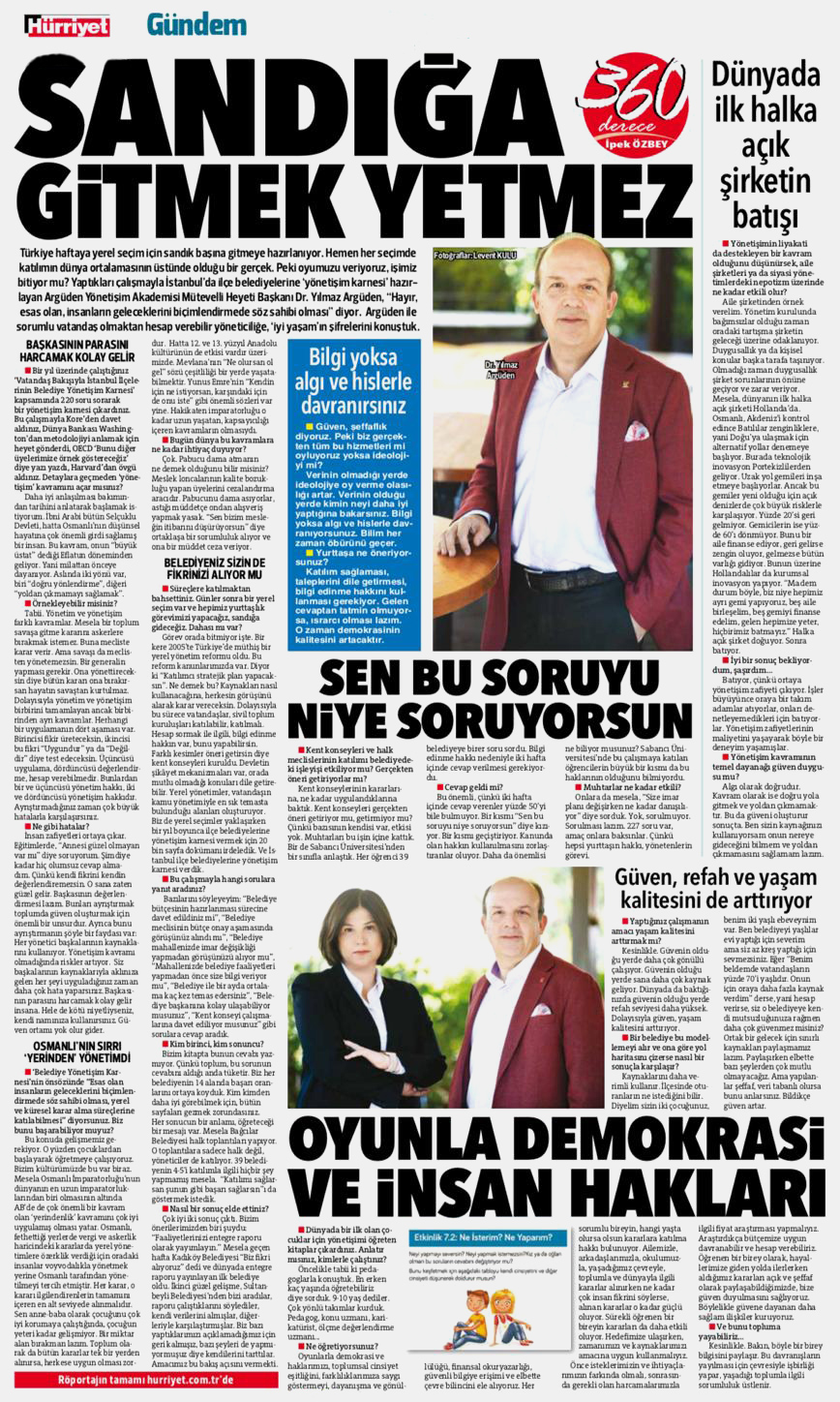
Dr. Yılmaz Argüden ve ekibi, belki de dünyada ilk kez geliştirdikleri özgün metodoloji ile objektif ve somut verilere dayanarak belediyelerde yönetişim kültürünü inceledi.

Yaşadığı dönemde ‘dünyanın en önemli düşünce insanı’ olarak görülen Peter Drucker’a ölümünden yaklaşık 10 yıl kadar önce bir gazeteci ‘en iyi kitabının hangisi olduğunu’ sorar. Drucker, düşünmeden “Önümüzdeki ay çıkacak olan” yanıtını verir. İlk duyulduğunda bir pazarlama oyunu olarak algılansa da, Drucker ‘en iyinin henüz yapılmamış’ olduğu inancındadır. O yüzden de çalışmaya, çaba göstermeye son nefesini verene kadar devam eder. Bu çabanın sonucunda da hayatı boyunca yazdığı 40’a yakın kitabın, üçte birini hayatının son 10 senesinde 85 yaşından sonra tamamlar.

Ortak Hareket, Geniş Katılım

İnsanoğlu, hayatının hiçbir döneminde bulduğuyla yetinmeden, daha iyisine özlem duyar. İşte bu özlemi, çabaya ve emeğe dönüştüren, halinden ‘rahatsız’ insanlar da dünyaya değişimi, yeniliği, inovasyonu getiren insanlar olarak öne çıkarlar. Bu çabanın bireysel, değil de birbiriyle etkileşim halinde hareket eden geniş kitleleri de içermesi hem etki alanlarını genişletmiş hem de farklı modellerin oluşturulması ihtiyacını yaratmıştır. Mevcudu yeterli bulmayarak sürekli daha iyisini düşünerek, çaba gösteren insanlardan biri de Dr. Yılmaz Argüden. Özellikle kâr amacı gütmeyerek kurduğu Argüden Yönetişim Akademisi kapsamında sınırlı kaynaklarla, daha iyisini oluşturmanın liderliğini yapıyor; sürekli düşünüyor, düşündürüyor, araştırıyor ve üretiyor. Dr. Argüden, yönetişimi, ‘toplumların, faaliyetlerini yönetmek amacıyla kullandığı politik, ekonomik ve yönetsel irade” bütünü olarak tanımlıyor. VUCA dünyasında, sadece ekonomik krizler değil, savaşlar, istikrarsızlık, göçler, iklim değişiklikleri, kirlenme, dünyadaki karar mekanizmalarının küreselleşmesi gereğini yaratırken bulundukları coğrafyadan bağımsız olarak insanların karşılıklı bağımlılığının ne kadar arttığını da bize kanıtlıyor. Özetle, Dr. Argüden’in tespiti ile ‘küresel yönetişim sistemlerinin sağlıklı çalışabilmesi için ortak hareket edilmesi ve geniş katılım sağlanması’ öncelik (Dr. Yılmaz Argüden’in sözü üzerine söz söylemek haddim olmasa da, belki de ‘şart’!)

İstanbul İlçelerinin Belediye Yönetişim Karnesi

Topluluklar halinde yaşayan insanların ortak karar alma ve uygulamada, çıkarlarını dile getirmede, yükümlülüklerini karşılamada ve çatışma noktalarının çözümünde kullandıkları demokratik mekanizmaların belki de en etkini yerel yönetimler. Yaklaşan yerel yönetim seçimleri öncesinde Argüden Yönetişim Akademisi’nin oluşturduğu ‘Belediye Yönetişim Karnesi’ uygulaması da bu yüzden, büyük önem taşıyor. Dr. Yılmaz Argüden ve ekibi, belki de dünyada ilk kez geliştirdikleri özgün metodoloji ile objektif ve somut verilere dayanarak, belediyelerde yönetişim kültürünü incelemişler. Sonuç olarak da ‘Vatandaş Bakışıyla’, örneklem olarak kullandıkları İstanbul İlçelerinin Belediye Yönetişim Karnesi’ni çıkartmışlar. Adı karne olsa da, hazırlanan çalışmada ‘geçen’ veya ‘kalan’ belediye yok. Her belediyeye ilham vermek ve daha iyisini yapma heyecanını kazandırabilmek amacı ile Argüden Yönetişim Akademisi kapsamlı analizlerle, ‘en iyi uygulamalara’ odaklanarak sonuç raporunu oluşturmuş. Başka bir deyişle, hazırlanan çalışma sadece yerel yönetimler ve belediyeler için değil, onlardan hizmet alan vatandaşlar için de bir kılavuz niteliğinde. Uluslararası normlar ve Türkiye’deki kanun ve yönetmelikler ile uyumlu hazırlanan özgün modelin, algılara dayalı olmaması, ölçülebilir ve karşılaştırılabilir sonuçlar oluşturması hem yerel yönetimlerin performansını daha ileriye taşıması için yol gösterici olacak hem de sandık başına gidecek seçmenler için objektif veri oluşturacak. Gönül istiyor ki, Argüden Yönetişim Akademisi’nin başlattığı bu değerli çaba, daha fazla odaklanma ve daha büyük kaynaklarla sadece İstanbul ilçe belediyeleri ile sınırlı kalmasın ve yerel yönetimlerde hak ettiği geniş kapsama alanına ulaşsın.

Murat Yeşildere
Platin Dergisi, 31 Ağustos 2018
An Analytical Approach for
Effective Public Expenditures

Public Expenditures
Analyzed in Depth

Citizen Engagement Improves
Quality of Democracy

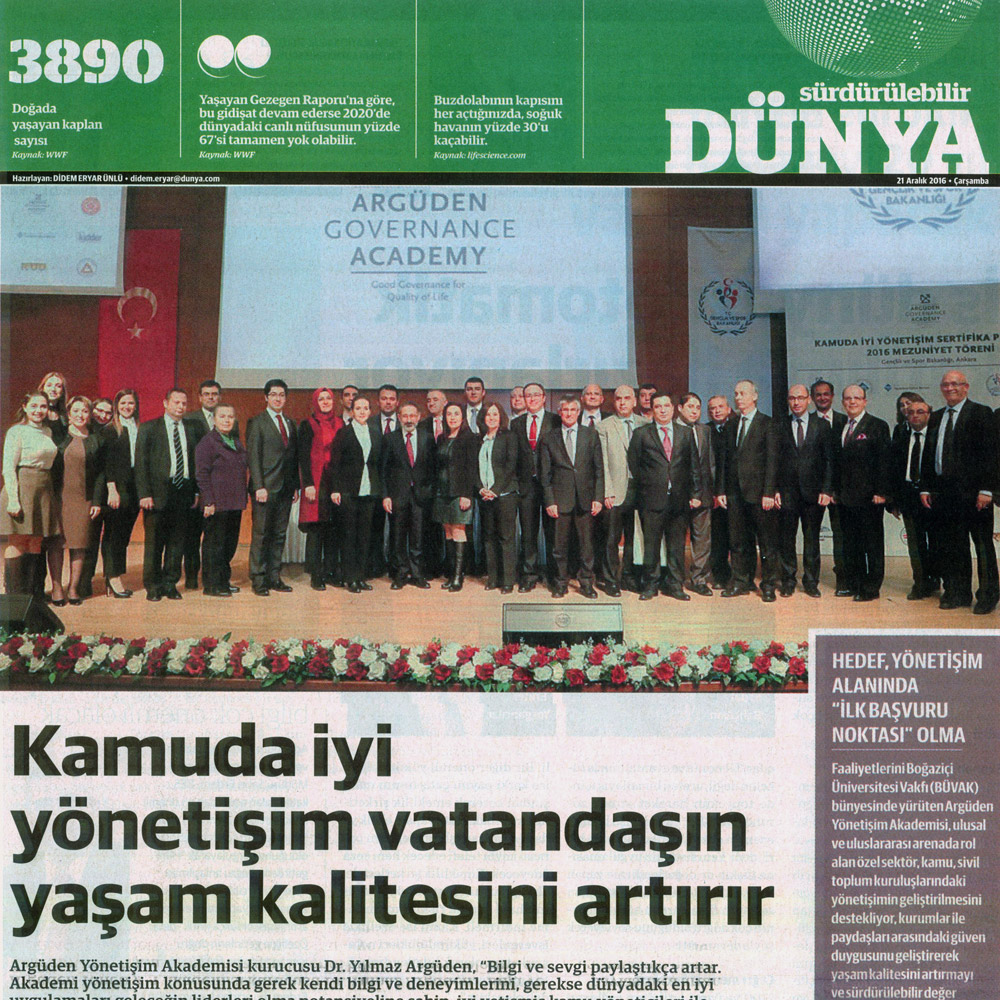
First Graduation Ceremony
for the Public Sector

Quality of Public Decision Making
Improves with Good Governance

A Global First From a Turkish Municipality

Kadıköy Became the First Municipality to Issue an Integrated Report

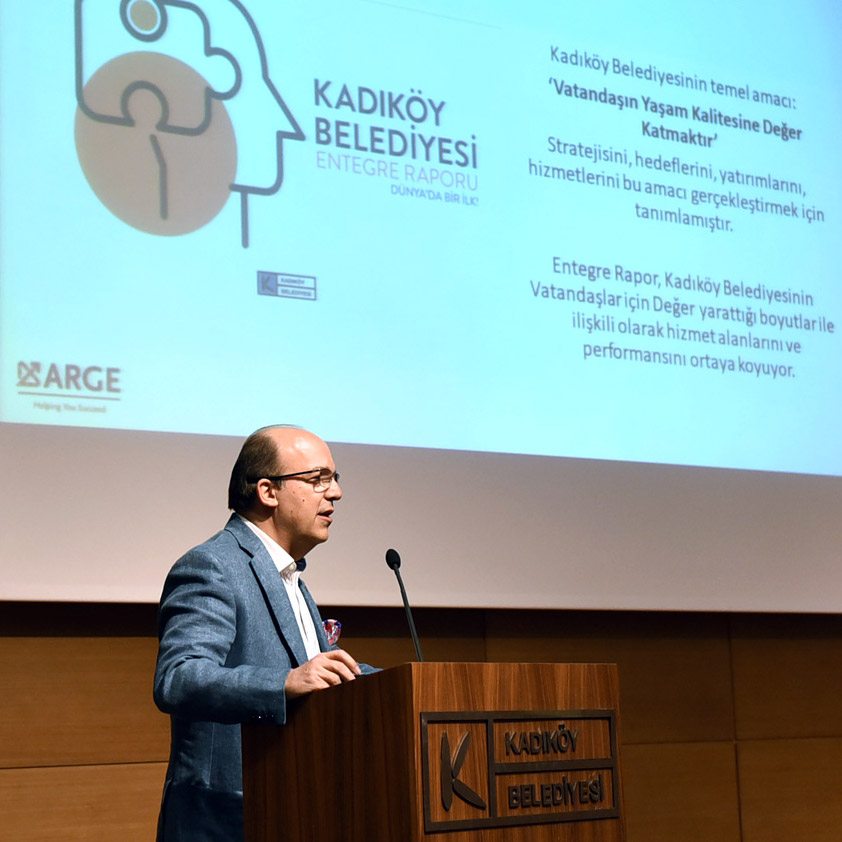
Kadıköy Municipality prepared the first Integrated Report for a local authority in the world. An integrated report is a concise communication about how an organization’s strategy, governance, performance, and prospects lead to the creation of value over the short, medium, and long term. The Model© that was developed for Kadıköy benefited from OECD Better Life Index, EFQM Excellence Model, and Sustainable Development Goals (SDGs)

“An Example for Other Public Autorities”

During the Press Conference, the Mayor Nuhoğlu presented the outcomes of the Kadıköy Municipality Integrated Report and expressed the fact that “We are proud to be the first municipality in the world to adopt Integrated Reporting which shows our commitment to transparency and accountability to our citizens and future generations.”. The Mayor also wished that “The Report will become an example for other public authorities to explain their activities and use of not only their financial resources, but also their social, natural, and human resources”. The Conference attracted the participation of Members of Parliament, Municipal Council Members, the Candidate Mayor of CHP and civil society organisations.

Kadıköy Citizens Expect More Than Essential Services

ARGE Consulting developed the Municipality Integrated Reporting Model© that adopted the International Integrated Reporting Council’s model and enriched it with the OECD Better Life Index, UN SDGs, and EFQM Excellence Model in preparing the Integrated Report for Kadıköy Municipality. Chairman of ARGE Consulting, Dr. Argüden said “Having promoted Integrated Reporting as the B20 Knowledge Partner during Turkish Presidency in 2015, we are happy to see Kadıköy becoming the first example of a local government to adopt it.” According to the Report’s findings, Kadıköy residents expected more than essential services and the Municipality’s activities were properly directed at raising the quality of life in general at the district.

Integrated Report: the Municipality Created Value for its Citizens

The Integrated Report focuses on the value creation for improving the quality of life in a sustainable world. At the Report, the district was analysed in different dimensions such as demographics, spatial, environmental, and economic aspects. The impact of Municipality’s policies and activities were evaluated for different segments of citizens. The results were measured according to the OECD’s Better Life Index criteria, UN’s Sustainable Development Goals, and European Foundation for Quality Management’ Excellence Model. The Report confirmed that the Municipality improved its citizens individual well-being, social welfare, urban development, and sustainable life. It also expressed the Municipality’s participatory governance mode, civil society partnership culture, and continuous institutional development efforts.

“Advocated Public Values, Defended Public Spaces”

Mayor Nuhoğlu, who served between 2014-2019, told the participants that “when Kadıköy was ranked at the top tier by the Municipality Governance Scorecard published by the Argüden Governance Academy last year, we decided to adopt Integrated Reporting which was one of the recommendations of the report to further improve our performance”. He also added that during his term, the Municipality used the public resources in appropriate activities with utmost responsibility.and defended many historical and green spaces for the benefit of public use with the support of the citizens, City Council and civil society organisations.

A Municipality Without Debt

The Report contains detailed information about the Municipality’s financial governance. It was singled out as a fact that the Municipality carried out wide spectrum of services and made important investments without any debt. This was an eye-catching fact given the current situation in Türkiye and the world.

Innovative Municipality for Future

In addition to the activities and their impacts, the Report also highlighted that the Municipality has been innovative in its service provision and developing new approaches such as Ecological Day Nursery, Alzheimer Centre and Participatory Climate Action Plan. The Integrated Report also indicated that participation and transparency principles were crucial in creating strong partnership for common good while contributing to the sustainability efforts at global scale.

During the Press Conference, the Mayor Nuhoğlu presented the outcomes of the Kadıköy Municipality Integrated Report and said “We are proud to be the first municipality in the world to adopt Integrated Reporting which shows our commitment to transparency and accountability to our citizens and future generations.” The Mayor also wished that “The Report will become an example for other public authorities to explain their activities and use of not only their financial resources, but also their social, natural, and human resources”. The Conference attracted the participation of Members of Parliament, Municipal Council Members, the Candidate Mayor of CHP and civil society organisations.

Argüden Governance Academy
is Founded

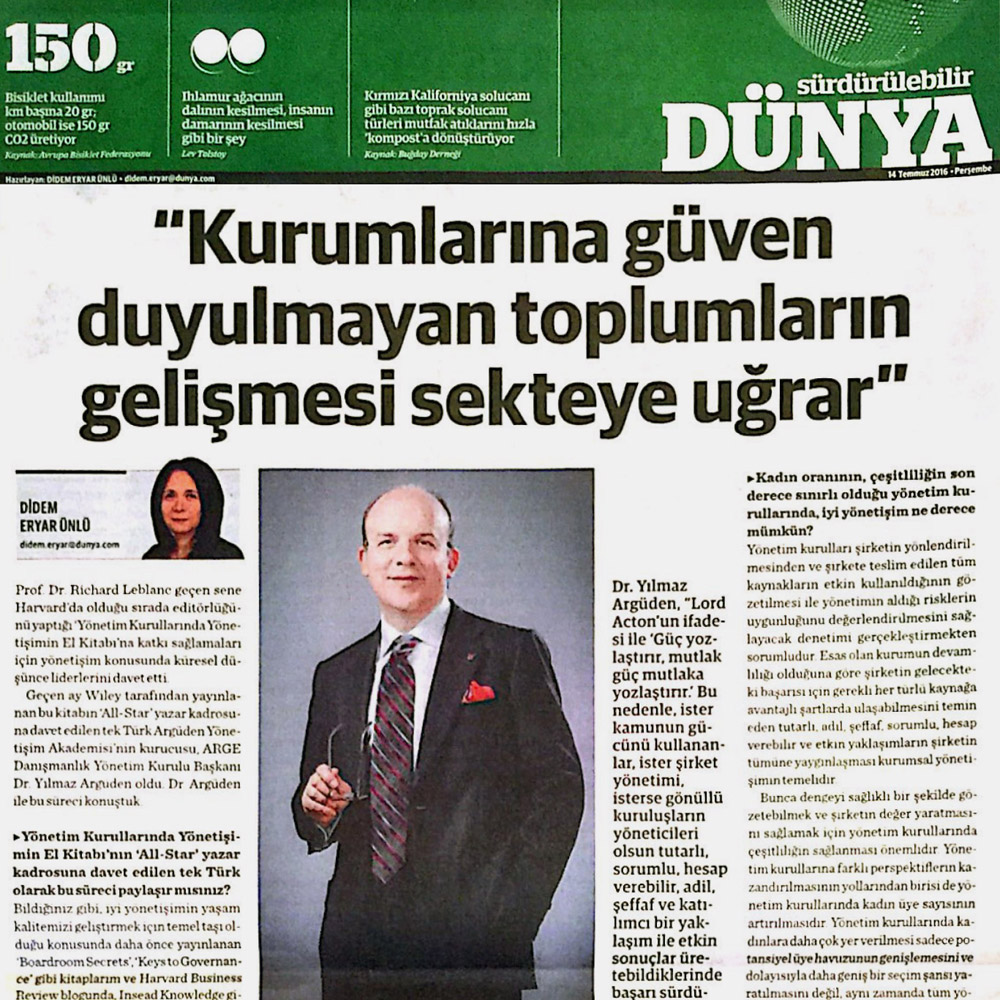
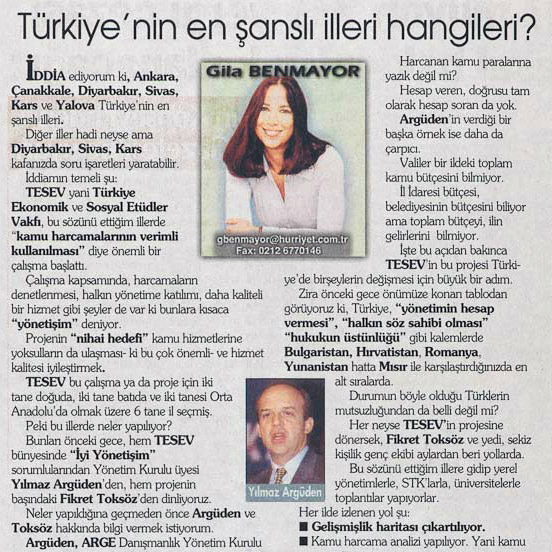
ARGE Danışmanlık Şirketi’nin kurucusu ve Yönetim Kurulu Başkanı Dr. Yılmaz Argüden ile sohbet şaşmaz bir şekilde “yönetişim” üzerine döner.

Nitekim bu kez de öyle oldu. Farsçaya dahi çevrilen “Yönetişimin Anahtarları“nın (kitap İngilizce yazıldı) yazarı Argüden‘in yönetişim tarifini çeşitli vesilelerle yazmıştım.

Bir kez daha tekrarlıyorum: “Yönetişim, yönetimin üzerinde bir kavram. Yönetimin nasıl denetleneceğini, nasıl yönlendirileceğini belirleyen bir mekanizma“. Bu mekanizmada devlet, özel sektör ve sivil toplum var. Pek aşina olmadığımız şeffaflık, hesap verme, denetim, tutarlılık, yerel bazda kararlara katılım, kurumlara güven gibi kavramları içeriyor.

Türkiye’de BM’nin “Küresel İlkeler” sözleşmesini ilk imzalayan kişi olan ARGE Yönetim Kurulu Başkanı’nın yeni göz ağrısı “Argüden Yönetişim Akademisi“.

Amacım yönetişim kavramının Türkiye çapında yayılması. Üniversitelere dersler konsun, sivil toplum, bürokrasi bunun eğitimini alsın. ARGE olarak birikimimizi gönüllü sunmaya, eğitim vermeye hazırız ” diyor Argüden. Yönetişimin “Don Kişot”u olarak.

Akademi tam bu sıralar OECD‘nin “iyi yönetişim ilkeleri“ni İngilizceden Türkçeye çeviriyormuş. Biter bitmez Ankara‘da çeşitli çevrelerle paylaşacak.

Yönetişim konusunda Kuzey Avrupa ülkelerinin eline hiçbir ülke su dökemez. Ancak Argüden‘in verdiği bilgiye göre, Yeni Zelanda bu konuda “devlet bilançosuyla” bir ilke imza atmış. Nedir bu bilanço derseniz? Devlet halkıyla bugün aldığı kararların gelecekteki etkilerini paylaşıyor.

Şöyle bir örnek vereyim. Bugün çok tartışılan Kanal İstanbul gibi bir proje gelecekte İstanbul‘u, insanları, Marmara Denizi‘ni ve en önemlisi bütçeyi nasıl etkileyecek? Yeni Zelandalı olsaydık öğrenebilirdik belki!

Bu arada ARGE‘nin yönetişimle ilgili danışmanlık verdiği kamu kurumları arasında Elazığ Belediyesi’nin de olduğunu öğrendim. Elazığ, birkaç yıl önce hapis dahil 40 kadar kişinin çeşitli cezalara çarptırılmasıyla sonuçlanan büyük bir yolsuzluk skandalıyla sarsılmıştı. ARGE önümüzdeki ayın sonunda Elazığ‘da düzenleyeceği kurultayda şehrin stratejik planının hangi yöntemlerle uygulanacağını ele alacak. Sanırım Elazığ Türkiye’de yönetişimle ilgili böyle bir açılım yapan ilk şehir olacak.

Yolsuzluk skandalından iyi bir ders çıkartmış. Darısı tüm Türkiye’ye diyeceğim…

Gila Benmayor,
Hürriyet Gazetesi, 21.10.2014

Good Governance
for Quality of Life!

Good Citizenship Requires Assuming Responsibility

Municipality Governance SC
Best-in-Class Example At OECD

OECD’s Observatory of Public Sector Innovation (OPSI) picked the Municipality Governance Scorecard as a best-in-class example of innovative approaches in local governments.

Citizen-Centric Good Governance and Quality of Life

Argüden Governance Academy’s scorecard research examined practices of 27 metropolitan municipalities in Türkiye. It is observed that all municipalities, including those with the highest scorecards, have significant areas of improvement in good governance.

Good governance is a culture and a climate in which such a culture flourishes. Governance is derived from the word ‘kybernao’ that dates back to the times of Plato and incorporates the concepts of providing guidance and oversight. Humans form institutions for two basic reasons: (i) to better utilize the resources and (ii) to manage the risks collectively. Institutions would be able to serve these purposes better if they have the trust of their stakeholders. As a culture of living together good governance needs not only leaders dedicated to such a culture but also a climate in which such culture is kept alive. The 13th century Turkish folk poet Yunus Emre summarizes the basic understanding of good governance eloquently with his words: “Regard the other as you regard yourself. This is the meaning of four Holy books, if there is any.”

Institutions that adopt good governance assume responsibility to help solve the problems of the society. The steps they take while fulfilling such responsibilities are consistent and fair, they are transparent and accountable for their decisions and the resources they utilize, and the results of these decisions taken with the participation of their stakeholders are implemented more effectively. In short, trusted institutions become more successful and sustainable.

Governance of metropolitan municipalities determines quality of life

Three-quarters of the world’s population lives in metropolitan areas. Adoption of good governance culture in metropolitan cities directly affects the quality of participative democracy, trust of the citizens, and quality of life in these metropoles. Therefore, improving the quality of governance in metropolitan cities means improving the quality of life of at least three quarters of the world’s population.

When good governance culture is strengthened in the metropoles, our policies and actions would be more inclusive, sustainable, and effective for sustainable development.

Metropolitan Municipality Governance Scorecard helps peer learning

To help improve the quality of life in cities through strengthening good governance in metropolitan cities, Argüden Governance Academy has developed an innovative governance measurement and evaluation tool. The Metropolitan Municipality Governance Scorecard is a citizen-centric governance model that can be used by every metropolitan municipality in Türkiye and in the world.

The Model takes into account the Sustainable Development Goals developed by the United Nations, OECD’s Better Life Index, European Council’s Good Governance Principles, EFQM’s Excellence Model, as well as the Turkish legal requirements that are in congruence with these. The Model focuses on whether the decision-making, resource utilization, and activities are consistent, responsible, accountable, fair, transparent, effective, and inclusive.

Scorecards do not measure the performance of municipal administrations or mayors, but rather measure the way policies, resource allocation, and implementation are conducted. As performance is context specific (depending on the initial conditions and the needs of each geography) and subjective (due to different impacts of policies on different groups of people), measuring the ‘how’ of policies is more instructive and enable benchmarking and learning than comparing the performance. Therefore, the Model helps speed up peer learning among the metropoles.

The scorecard project examined the governance practices of 27 metropolitan municipalities administered by elected mayors in Türkiye, through analysis of publicly available data published by municipalities and easily accessible to citizens. A citizen-centric measurement tool of how the system works contributes to democratization, sustainable development, and human welfare, starting from the local level.

Even the best ones have ample room for doing better

Within the scope of the research, Adana, Ankara, Antalya, Aydın, Balıkesir, Bursa, Denizli, Erzurum, Eskişehir, Gaziantep, Hatay, İstanbul, İzmir, Kahramanmaraş, Kayseri, Kocaeli, Konya, Malatya, Manisa, Mersin, Muğla, Ordu, Sakarya, Samsun, Şanlıurfa, Tekirdağ, and Trabzon metropolitan cities were examined. According to the results of the research, good governance culture and practices of 27 metropolitan municipalities range between 35-74 percent, while more than half of them are in the range of 45-64 percent.

The best group received scores between 65-74 percent included only 5 metropolitan municipalities, namely Ankara, Antalya, Eskişehir, İstanbul and Kocaeli Municipalities in alphabetical order. However, it is observed that all municipalities, including those with the highest scorecards, have significant areas of improvement in good governance.

The project concludes that for sustainable development and better quality of life all municipalities need to

• Improve quality of citizen participation,
• Improve quality of information that is made available to the citizens,
• Improve their processes and adopt integrated thinking

in order to have a meaningful stakeholder engagement with the citizens and interested NGOs and strengthen participative democracy, as well as trust between the citizens and local governments. The report also provides recommendations to the public administrations both local and central, as well as for the NGOs and citizens.

This unique Model developed by Argüden Governance Academy helps measurement of governance at metropolitan municipalities to enable benchmarking and peer learning. As such it is an innovative attempt to improve quality of life throughout the metropoles in the world.

Dr. Yılmaz Argüden, Yetkin Report
October 5th, 2022

Council of Europe Accredited the Academy for ELoGE in Türkiye

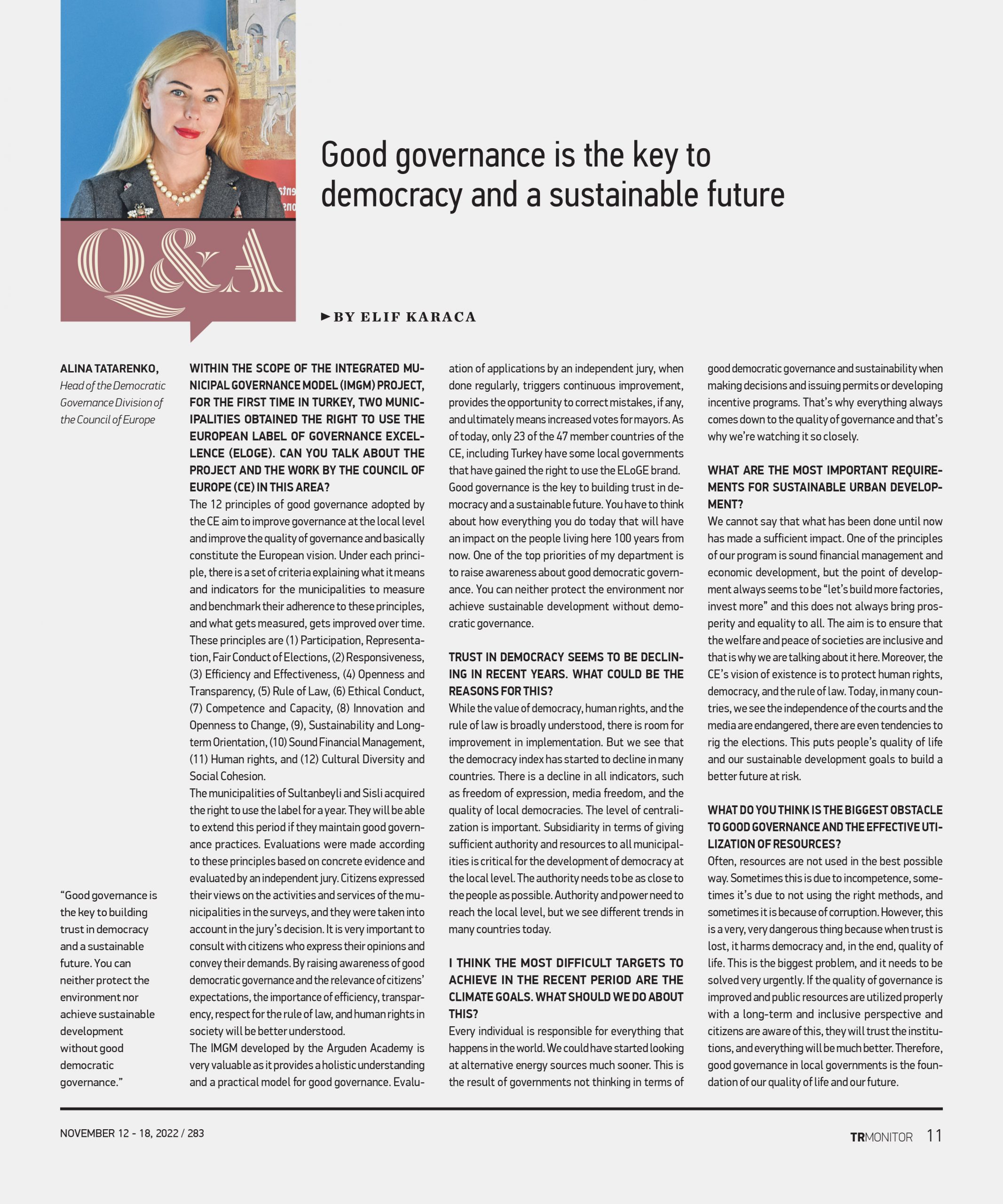
Council of Europe accredited Argüden Governance Academy to lead the establishment of the Turkish network and the process of granting European Label of Governance Excellence in Türkiye.

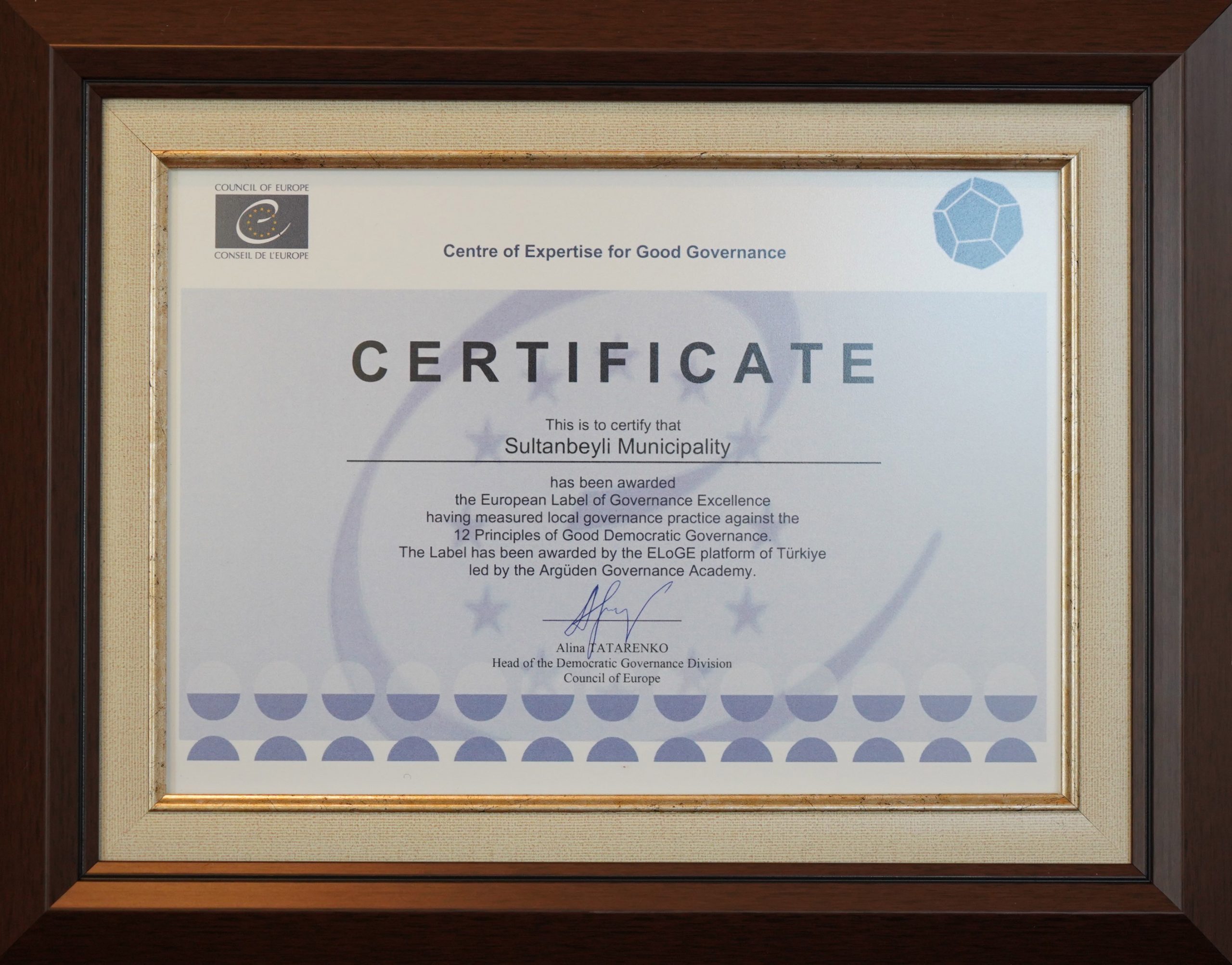
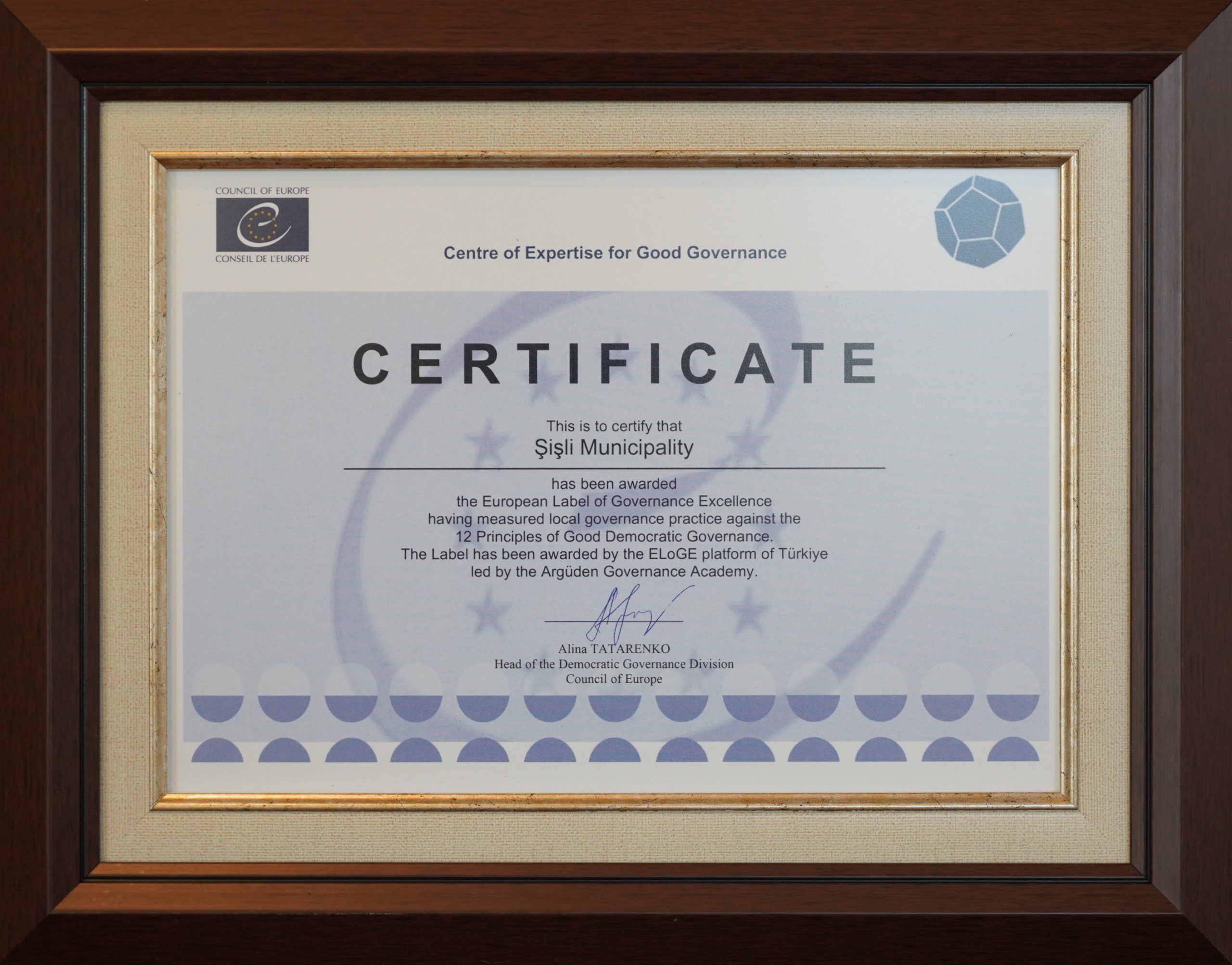
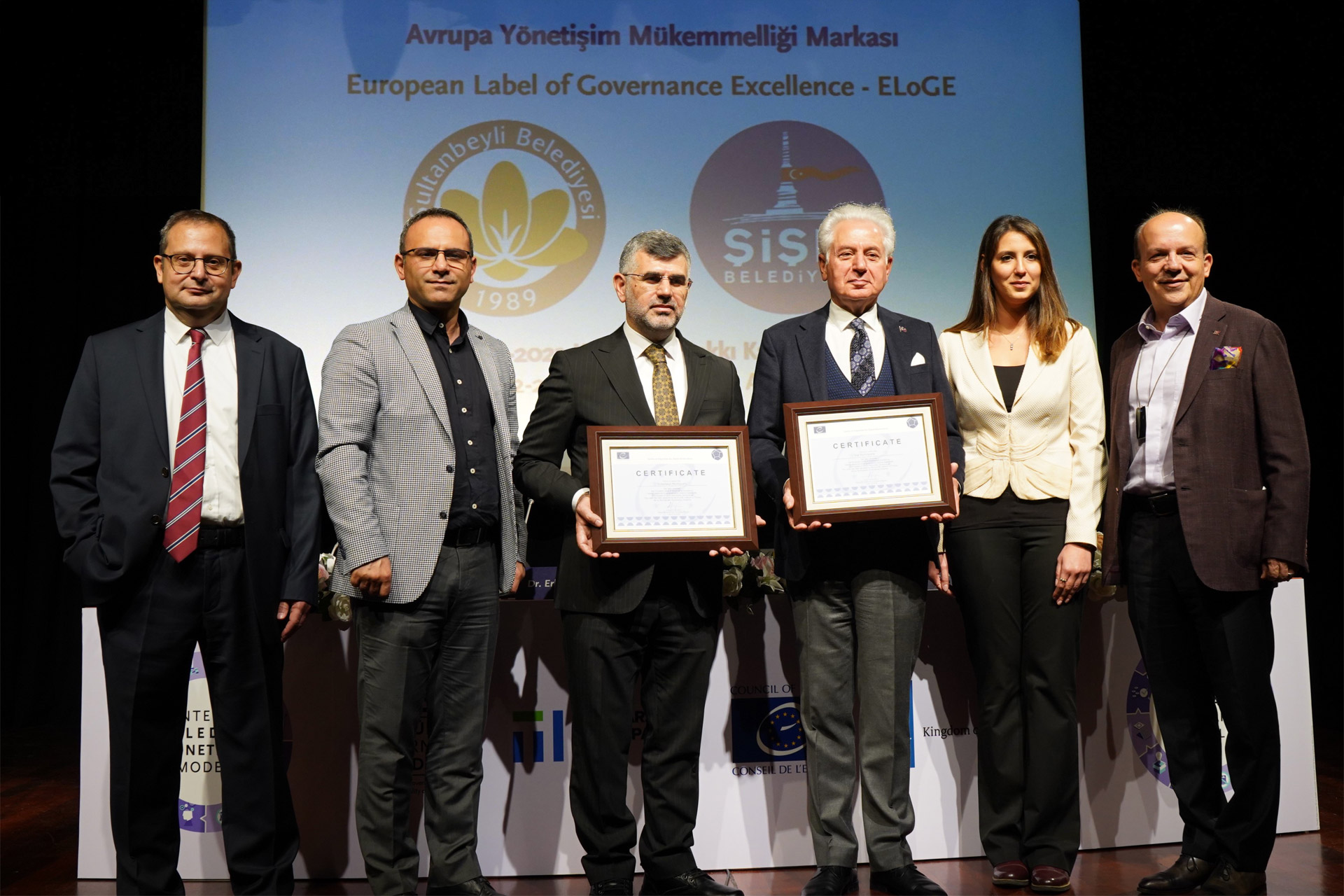
Independent jury established by the platform decided to grant Sultanbeyli and Şişli Municipalities the right to use European Label of Governance Excellence – ELoGE for a year as pioneering municipalities in Türkiye.

Good governance for democracy and a sustainable future

The Cradle of Democracy: Municipalities

Two municipalities in Türkiye, Sultanbeyli and Şişli Municipalities, acquired ‘European Label of Governance Excellence’ (ELoGE) utilizing Integrated Municipal Governance Model which is developed by Argüden Governance Academy.

In the current global context, preserving and promoting the democratic system is of utmost importance to improve the quality of life. Building trust is the key to reinforcing democracy, as trust is the foundation of sustainable development. Trust for democracy could only be built by adopting good governance with a (i) whole of society, (ii) whole of government, and (iii) whole the policy cycle approach that focuses on (a) informed, inclusive stakeholder engagement, (b) evidence-based decision making supported by ex-ante and ex-post impact analysis, and (c) integrated thinking to support continuous learning.

Municipalities are the institutions that people have the closest relationship with the public authority. Therefore, adoption of a citizen-oriented local governance approach is critical for building trust and for the development of democracy and the culture of living together with the people with whom we share common resources.

By implementing the Integrated Municipality Governance Model©️ developed by the Argüden Governance Academy, the Sultanbeyli and Şişli Municipalities acquired the right to use the European Label of Governance Excellence (ELoGE) for the first time in Türkiye as an important milestone for the development of democracy and trust.

Good Governance for a Better Future and Quality of Life

Good governance is a culture and a climate in which a trust culture thrives. Good governance is a culture that Anatolian civilization is well aware of, which incorporates just and ethical moral standards. For example, Ahi culture that focused on good morals and righteousness was instrumental in the economic development of Anatolia through the Seljuk and Ottoman times. The famous folk poet and philosopher of Anatolia, Yunus Emre’s words of wisdom:
“Regard the other, as you regard yourself
That is the meaning of four Holy books, if there is any”
provide a good summary of a culture to build social trust.

Good governance requires taking responsibility for the problems in society, producing consistent, fair, and effective solutions to these problems, being transparent and accountable in the process, and ensuring considering the needs and priorities of everyone affected by the problem and the solutions through active participation.

The emergence and continuous development of this culture in individuals from all age groups and in institutions from all sectors creates a climate of “trust” in the society. Trust is the essence of good governance and the key to sustainable development.

In short, good governance that builds trust in institutions which is essential for a better future and sustainable development.

The Model for Taking the Municipalities on a Journey to Excellence

Argüden Governance Academy strives to develop a good governance culture in every age group and in every sector.

Almost all of the children in the 9-10 age group that we met in the ‘Good Governance for Kids’ education program, consider their families, schools, and municipalities as the main actors that can address and solve their problems. It is easy to understand why this age group choses the family and schools. But this evidence clearly shows that municipalities, also gain priority as the closest public institution to the citizens in finding solutions to the problems in their daily lives.

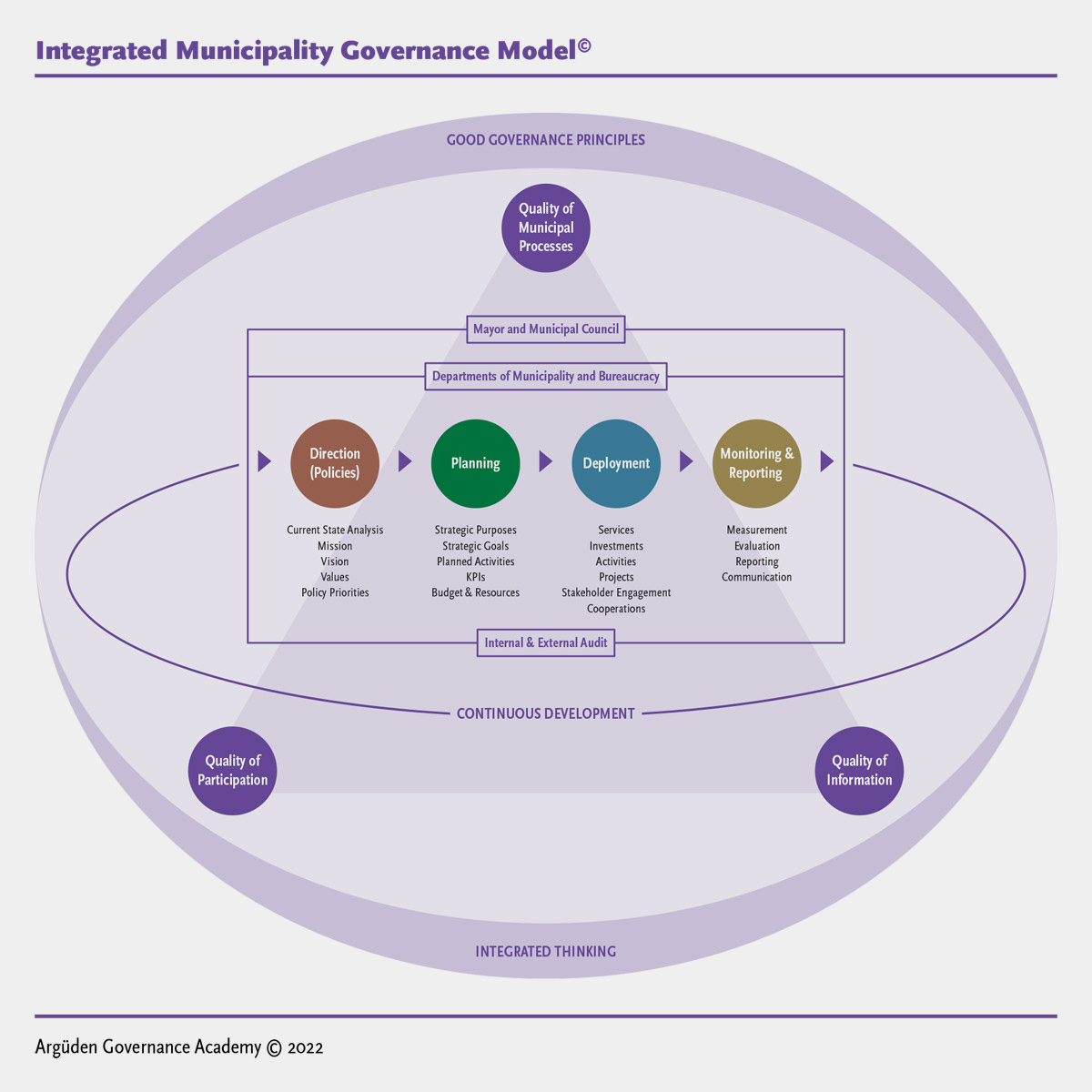
From the age group of 9-10, municipalities, which are the institutions that every citizen resorts to in solving problems, also need to develop a good governance culture in order to increase trust for democracy. The Integrated Municipal Governance Model©️, developed by Argüden Governance Academy, helps improve the level of governance practices in municipal processes through measurement and evaluation for continuous learning. It focuses on improving the quality of participation, quality of information and disclosures, as well as the quality of processes. Overall, it provides a roadmap and guidance for implementing good governance and continuously building trust.

Integrated Municipal Governance Model

Integrated Municipal Governance Model©️ was implemented for the first time in 2 municipalities in Türkiye within the scope of the Integrated Municipality Governance Model Project that was supported by the Dutch Consulate General and was carried out under the coordination of Argüden Governance Academy, in cooperation with the Council of Europe, Marmara Municipalities Union, and Sultanbeyli and Şişli Municipalities. European Council’s ‘European Label of Governance Excellence’ (ELoGE) were acquired by these two municipalities after a year of preparation utilizing this Model. The applications of these municipalities were evaluated by an independent jury consisting of highly regarded former public officials, academicians, and NGOs.

I sincerely hope that the experience and success of Şişli and Sultanbeyli Municipalities will not only be continued but also become role model for others to follow suit to further develop and build a culture of trust for the institutions and democracy.

Dr. Yılmaz Argüden, Yetkin Report
November 30th, 2022

First Time in Türkiye: Participatory Democracy School

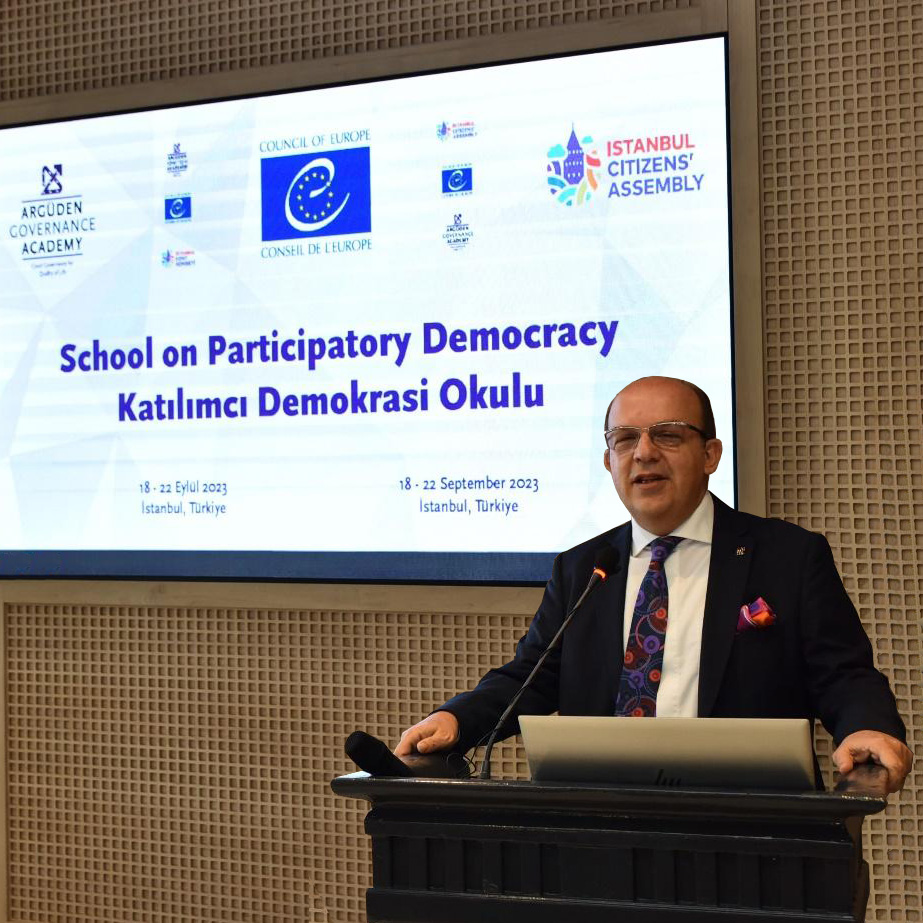
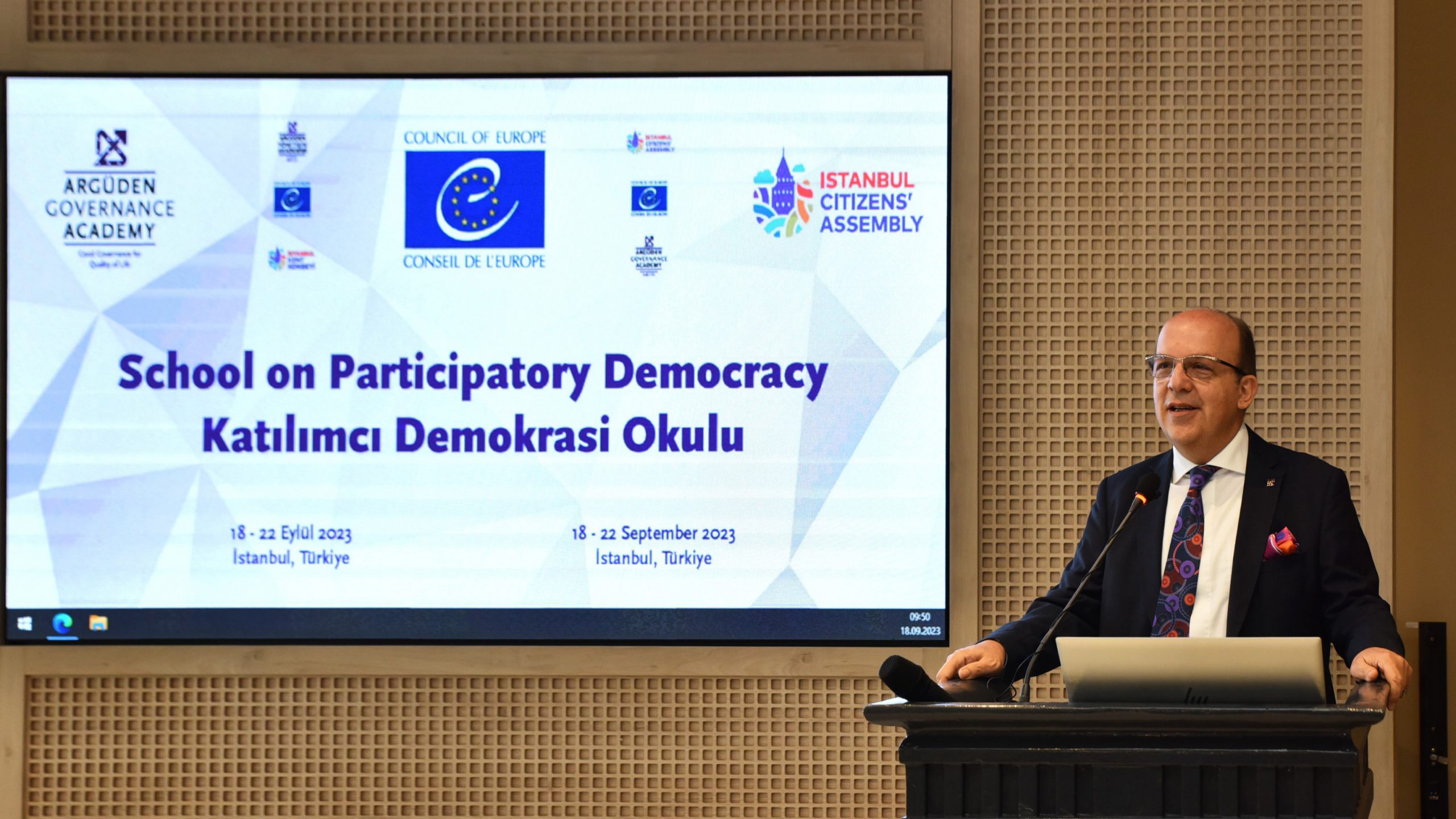
The School on Participatory Democracy is organized in Türkiye for the first time through a collaborative effort between the Council of Europe, Argüden Governance Academy, and Istanbul Citizens’ Assembly.

Representatives of local governments and civil society organizations from different cities, including İstanbul Adana, and Balıkesir attended the School on Participative Democracy whose curriculum covers Council of Europe’s participatory democracy approach and standards. The discussions focused on the principles and tools for enhancing civil participation at the local level. Participants explored various civil participation tools, best practices, and experiences from different European countries. Topics such as public space design, participatory budgeting, youth engagement, and citizen panels were among the special topics discussed. The School on Participatory Democracy aims to strengthen civil participation at the local level.

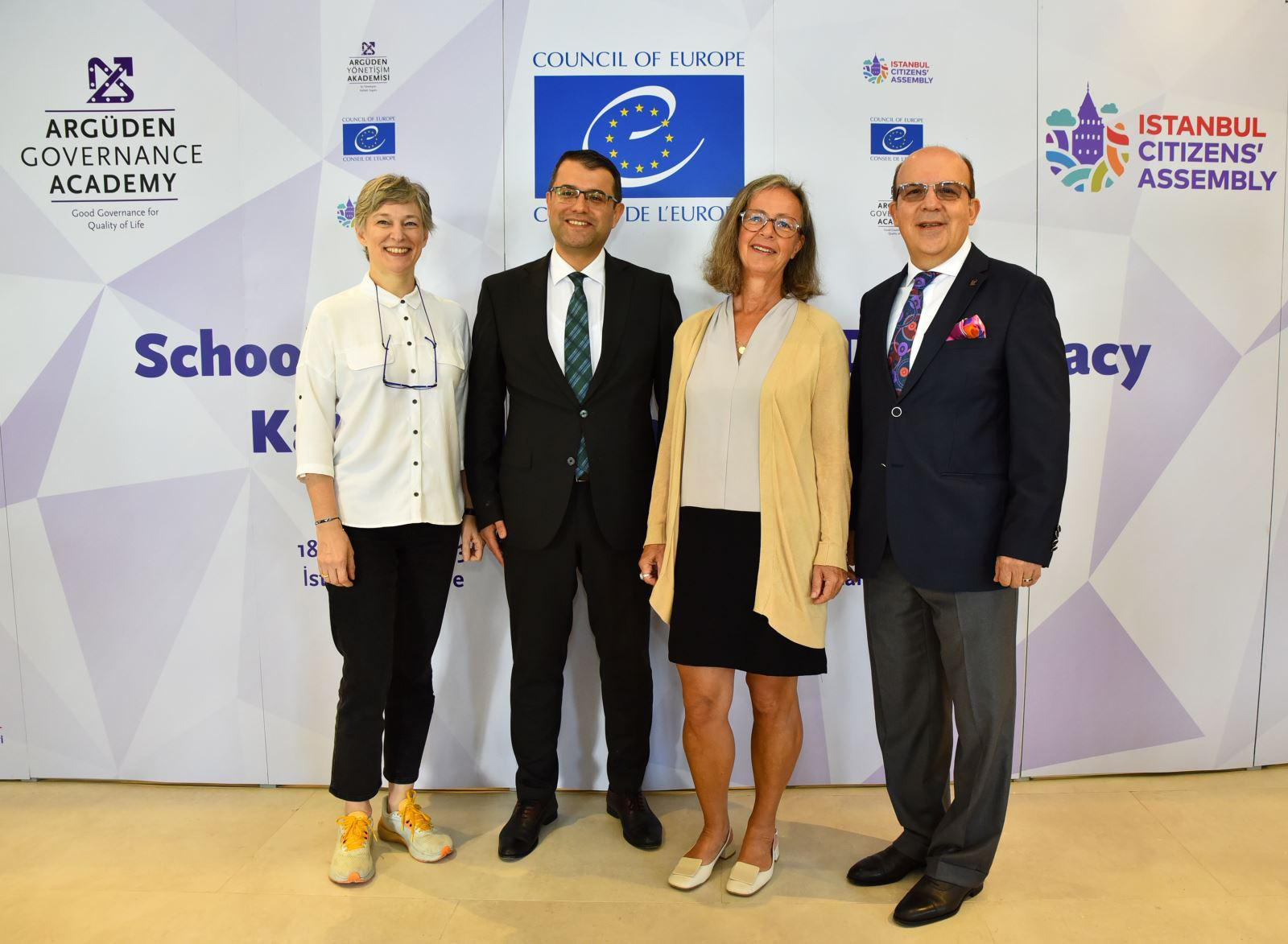
The opening remarks of the program were delivered by Ali Galip Yükseltmek, Head of the Strategy Department of the Istanbul Metropolitan Municipality, Cornelia Perle, Representative of the Council of Europe’s Elections and Participatory Democracy Division, Tülin Hadi, President of the Istanbul Citizens’ Assembly, and Dr. Yılmaz Argüden, Chair of Trustees of Argüden Governance Academy.

Tülin Hadi (İstanbul Citizen’s Assembly), Ali Galip Yükseltmek (İstanbul Metropolitan Municipality), Cornelia Perle (Council of Europe), Dr. Yılmaz Argüden (Argüden Governance Academy)

In his speech, Ali Galip Yükseltmek highlighted the Istanbul Metropolitan Municipality’s emphasis on participatory democracy and civil engagement in its work. He emphasized the effective use of citizen and civil participation in decision-making processes, especially in activities such as preparing the strategic plan and conducting participatory budgeting.

In her speech, Cornelia Perle from the Council of Europe emphasized the importance of the active efforts and participation of civil society as well as local governments in strengthening participatory democracy. She noted that former participants of the school continue to collaborate as a network, highlighting that this five-day exchange of knowledge and experiences will have an impact on the future.

Tülin Hadi, President of the Istanbul Citizen Assembly, stated in her speech that strengthening participatory democracy and civil participation in cities are their top priorities. She explained that the purpose of organizing this school is to introduce standards, principles, tools, and best practice examples that municipalities and civil society organizations can use to enhance civil participation. She emphasized that as skills in using civil participation tools develop, practical work can be implemented more effectively. She underlined that participatory democracy is a culture, and sharing best practices is essential for its continuous development.

In his speech, Dr. Yılmaz Argüden, Chair of Trustees of Argüden Governance Academy, emphasized that “Trust is the essence of good governance, the foundation of sustainable development and quality of life. Building Trust and Reinforcing Democracy is a key priority for all OECD countries and informed, inclusive stakeholder engagement is key for building trust.” He continued to explain that initiating the ‘School on Participative Democracy’ in Türkiye is a natural extension of the Academy’s work to improve the quality of governance, such as the Municipality Governance Scorecard©, Local Development Guides, training programs for public and NGO managers, and the awarding of the European Label of Governance Excellence (ELoGE) for identifying and promoting good governance examples among local governments.

Milli Gazete
September 22, 2023

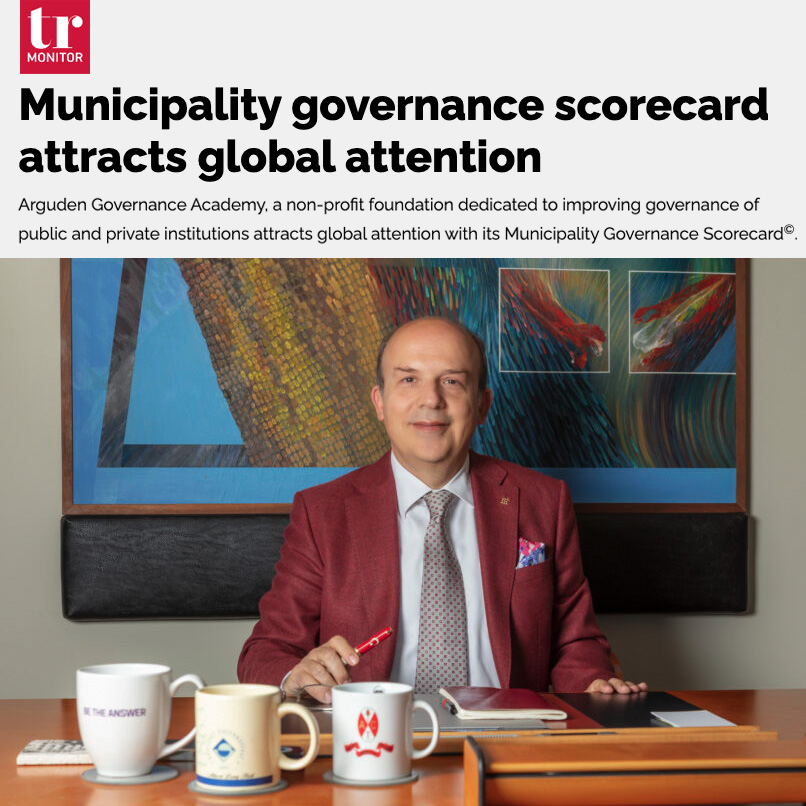
Municipality Governance Scorecard Recognized Globally

Argüden Governance Academy, a non-profit foundation dedicated to improving governance of public and private institutions attracts global attention with its Municipality Governance Scorecard©. Speaking to Ekonomi daily, Argüden Governance Academy Chair of Trustees Dr. Yılmaz Argüden states that OECD’s Observatory of Public Sector Innovation (OPSI) picked the Municipality Governance Scorecard© as a best-in-class example of innovative approaches for local governments and a letter from Harvard indicated that ‘it is cutting-edge research on good governance.’

The Municipality Governance Scorecard© incorporates the UN Sustainable Development Goals, OECD’s Better Life Index, European Council’s Good Governance Principles, and EFQM’s Excellence Model. Scorecards do not measure the performance of municipal administrations, but rather measure the way policies, resource allocation, and implementation are conducted. Therefore, the Model helps speed up peer learning among municipalities.

The original research was conducted in 2018 before the last local elections. Following a recommendation of the 2018 research, Kadıköy, a famous İstanbul district, adopted Integrated Reporting and became the first local government to do so globally. The 2023 version that includes comparisons with the previous version will be made public in January 2024, just before the next local elections and will provide insights for better governance.
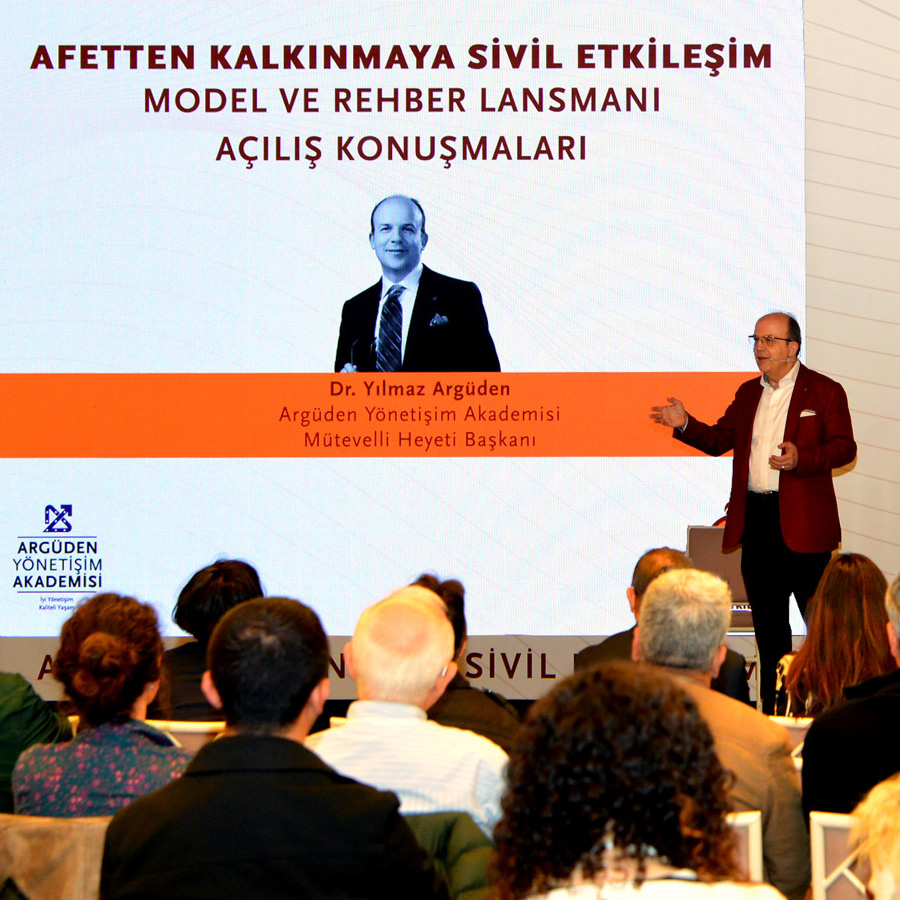
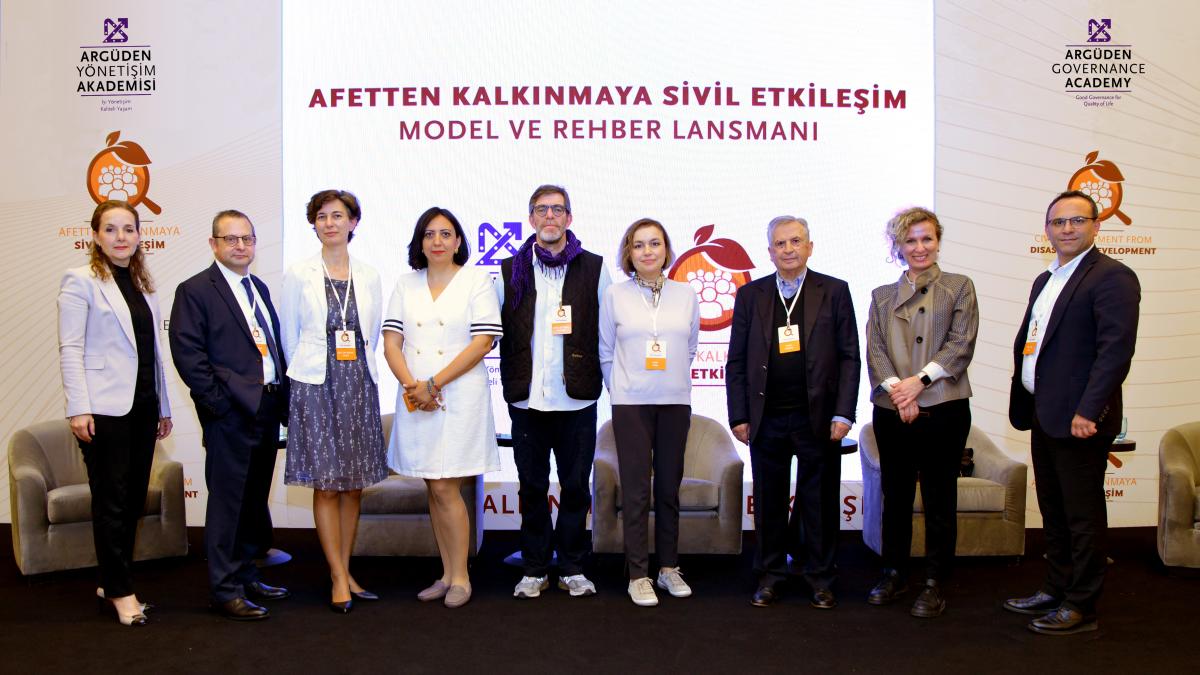
The Academy, whose publications include an Integrated and Inclusive Strategic Planning Guide, a Local Development Guide that encourages business and NGO participation in public decision making, was accredited by the Council of Europe to lead the process of European Label of Governance Excellence (ELoGE) in Türkiye. Utilizing the Integrated Municipality Governance Model© developed by the Academy, two İstanbul district municipalities, Sultanbeyli and Şişli acquired the right to utilize the ELoGE for a year in 2022. 2023 applications from not only district municipalities but also some metropolitan municipalities are already received by the Academy and after the review of an Independent Jury, the 2023 awardees will be announced in December.

Also in September 2023, the Council of Europe, İstanbul Citizens’ Council, and the Academy collaborated to conduct the first Participatory Democracy School in Türkiye. The Academy also has other innovative programs such as ‘Governance for Kids’, a game based approach to teach good governance to elementary school students, a vibrant ‘Governance Youth Network’ with members from over 40 universities, as well as ‘Sustainability Governance Scorecard©’ that analyzes over 200 Global Sustainability Leaders from 7 different stock exchanges to help improve peer learning on sustainability, which was picked among good examples to improve the sustainability on a global scale at the G20 Tokyo.

Dr. Argüden says “Trust is the essence of good governance and foundation of sustainable development” and the Academy’s purpose, mission, and vision are:

Purpose: Improving quality of life and sustainability of the future.
Mission: Improving quality of governance to improve trust for organizations.
Vision: Being ‘a center of excellence’ for development and widespread adoption of good governance culture.

TRMonitor
November 13, 2023

6 Turkish Municipalities
Acquired the ELoGE

The Council of Europe’s European Label of Governance Excellence (ELoGE) have been acquired by six Turkish municipalities for the 2023-24 period. 

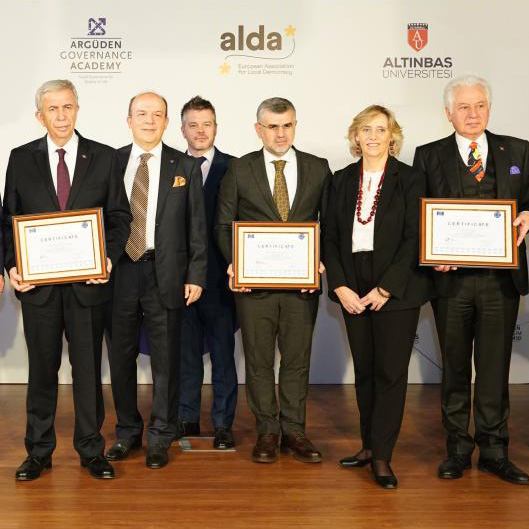
The ELoGE, which is a symbol of good governance culture in local governments is given by the National Platform established in Türkiye under the coordination of Argüden Governance Academy.  In 2023, the National Platform was formed by Argüden Governance AcademyEuropean Association for Local Democracy, and Altınbaş University. The municipalities that received the right to use the Label granted by the National Platform until the end of 2024 are Ankara Metropolitan Municipality, Eskişehir Metropolitan Municipality, as well as Bağcılar, Gebze, Sultanbeyli and Şişli Municipalities.

The European Label of Governance Excellence aims to develop a good governance culture in municipalities and to ensure the adoption of 12 good governance principles at all levels of local government. In 2023, 9 municipalities, including metropolitan cities, applied for the European Label of Governance Excellence which is attracting increasing attention from municipalities in Türkiye.

The Label applications for the 2023-2024 period were evaluated by an Independent Jury convened by Argüden Governance Academy, European Association for Local Democracy, and Altınbaş University. Good governance and local governments, in a jury composed of competent and expert members; Retired governors and bureaucrats, political science professors, and members of good governance were present. In 2023, 9 municipalities applied and the 6 municipalities who acquired the right to utilize the ELoGE until the end of 2024 are Ankara and Eskişehir metropolitan municipalities, and Bağcılar, Gebze, Sultanbeyli and Şişli district municipalities from Istanbul.

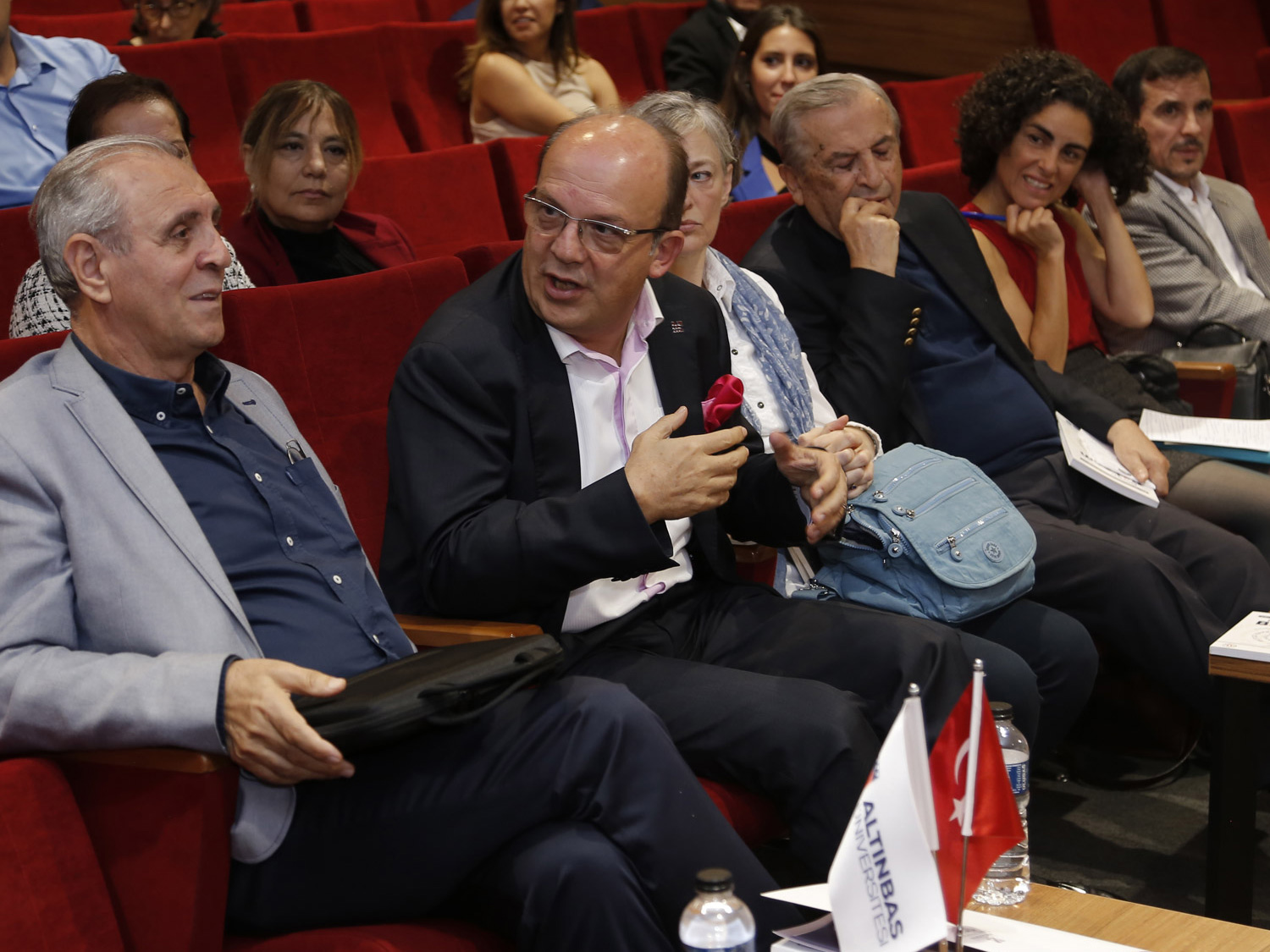
The 6 municipalities were announced at the ceremonies held at the Gayrettepe Campus of Altınbaş University on December 14. The opening speeches of the ceremony were made by Vice President of Council of Europe Good Governance Expertise Center Niall Sheerin, Secretary General of European Local Democracy Association (ALDA) Antonella Valmorbida, Rector of Altınbaş University Prof. Dr. Çağrı Erhan, and Chairman of Trustees of Argüden Governance Academy Dr. Yılmaz Argüden.

The Vice President of the European Council’s Center of Expertise in Good Governance, Niall Sheerin, expressed delight at the second meeting of the European Label of Governance Excellence with municipalities in Türkiye. Sheerin stated, ‘ELoGE serves as a mirror for local governments. Today, not only do we recognize the municipalities that have earned the Label for one year, but we also invite other municipalities to apply next year with the aim of enhancing the quality of life and promoting the development of democracy at the local level.”

Expressing the increasing significance of the partnerships they have developed in Türkiye for European Association for Local Democracy (ALDA), Antonella Valmorbida, the Secretary General of the ALDA, stated, ‘We are very pleased to collaborate with Argüden Governance Academy to recognize the efforts of municipalities in promoting good governance at the local level and to award ELoGE.

Expressing joy in being together with solution-oriented municipalities, Prof. Dr. Çağrı Erhan, the Rector of Altınbaş University, stated in his speech, ‘It is possible to talk about good governance when the ideas and desires of people who are a part of urban life are taken into account. I individually congratulate all the mayors who have earned the right to receive this Label.

Dr. Yılmaz Argüden, Chairman of the Board of Trustees of Argüden Governance Academy, who is accredited by the Council of Europe to lead the process and coordinate the National Platform for the process of European Label of Governance Excellence in Türkiye, said “Trust for institutions is the key for quality of life and sustainable future. Deployment of a good governance culture in municipalities will not only improve inclusive and participative democracy, but also quality of life by improving citizens’ trust.”.

Following the award ceremonies, the awarding municipalities shared their experiences and good examples in the panels.

The Capital City of Türkiye, Ankara Metropolitan Municipality Mayor Mansur Yavaş stated, “My commitment was to work closely with every segment of society for transparency and accountability. Ankara Municipality gains the trust of the citizens with the meaningful information it provides. Acquiring ELoGE will encourage other municipalities in our country to implement good governance practices.”

Sultanbeyli Municipality Mayor Hüseyin Keskin expressed happiness and pride in earning the Label for the second time along with Şişli Municipality. Hüseyin Keskin said, “Encouraging the participation of every segment of the public in decision-making and making efforts in this regard increase citizen trust and satisfaction. Applying for the Label every year is a meaningful indicator of our commitment to continuous improvement.”

Şişli Municipality Mayor Muammer Keskin added“When we won the elections 5 years ago, we always said that we will be participatory, transparent, accountable, and inclusive processes during our management. The European Label of Governance Excellence, we received as one of the pioneering municipalities paved the way for many projects such as Neighbor Desk (Komşu Masa) and Participatory Budget.”

Integrated Municipality Governance Model© (IMGM)

Argüden Governance Academy, which works to disseminate the management approach for quality of life, includes the Integrated Municipality Governance Model in order to contribute to the initiation of the European Label of Governance Excellence (ELoGE) by municipalities in Türkiye and the dissemination of the citizen-centered governance approach. Thanks to the IMGM, municipalities will be able to holistically and effectively implement the Council of Europe’s 12 principles of good governance at every stage of the democratic, administrative and financial management. In this way, they will achieve sustainable and inclusive development at the local level and contribute more to the quality of life of production.

Municipality Governance Scorecard 2023 Released

Ali Saydam, Yeni Şafak
January 13, 2024

Turkish Municipalities Awarded with ELoGE

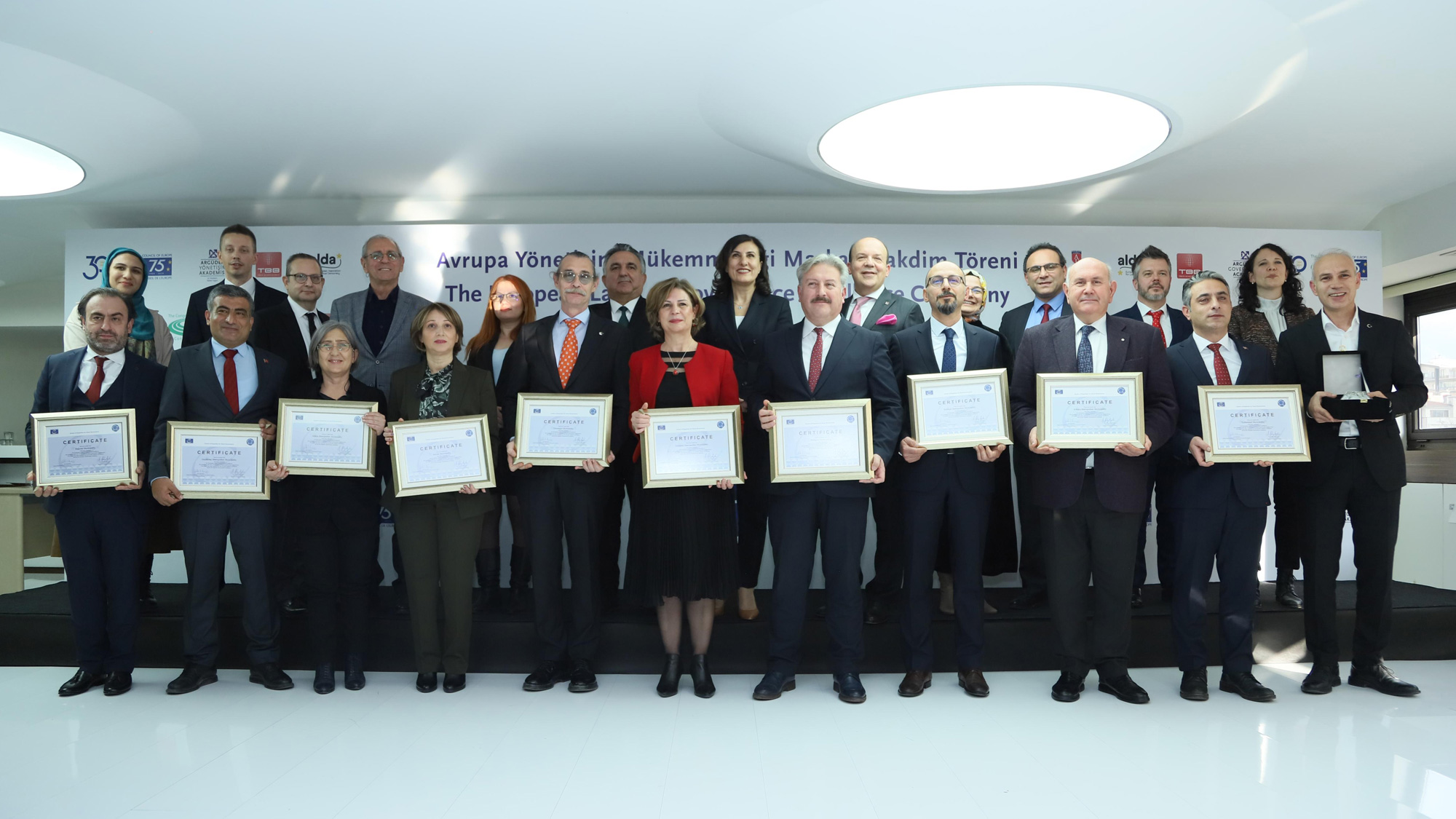
5 Turkish Metropolitan Municipalities, 2 Provincial Municipalities and 6 District Municipalities acquired the right to use The European Label of Governance Excellence (ELoGE) for the 2024-25 period. Under the coordination of the Argüden Governance Academy, accredited by the Council of Europe to lead the process in Türkiye, evaluations were carried out by an independent jury convened under the National Platform. In addition to the Academy, the Platform consists of the Union of Municipalities of Türkiye (UMT), the European Association for Local Democracy (ALDA), and Altınbaş University. The municipalities acquired the right to use the Label until the end of 2025, including four municipalities who renewed their right to use the Label from last year.

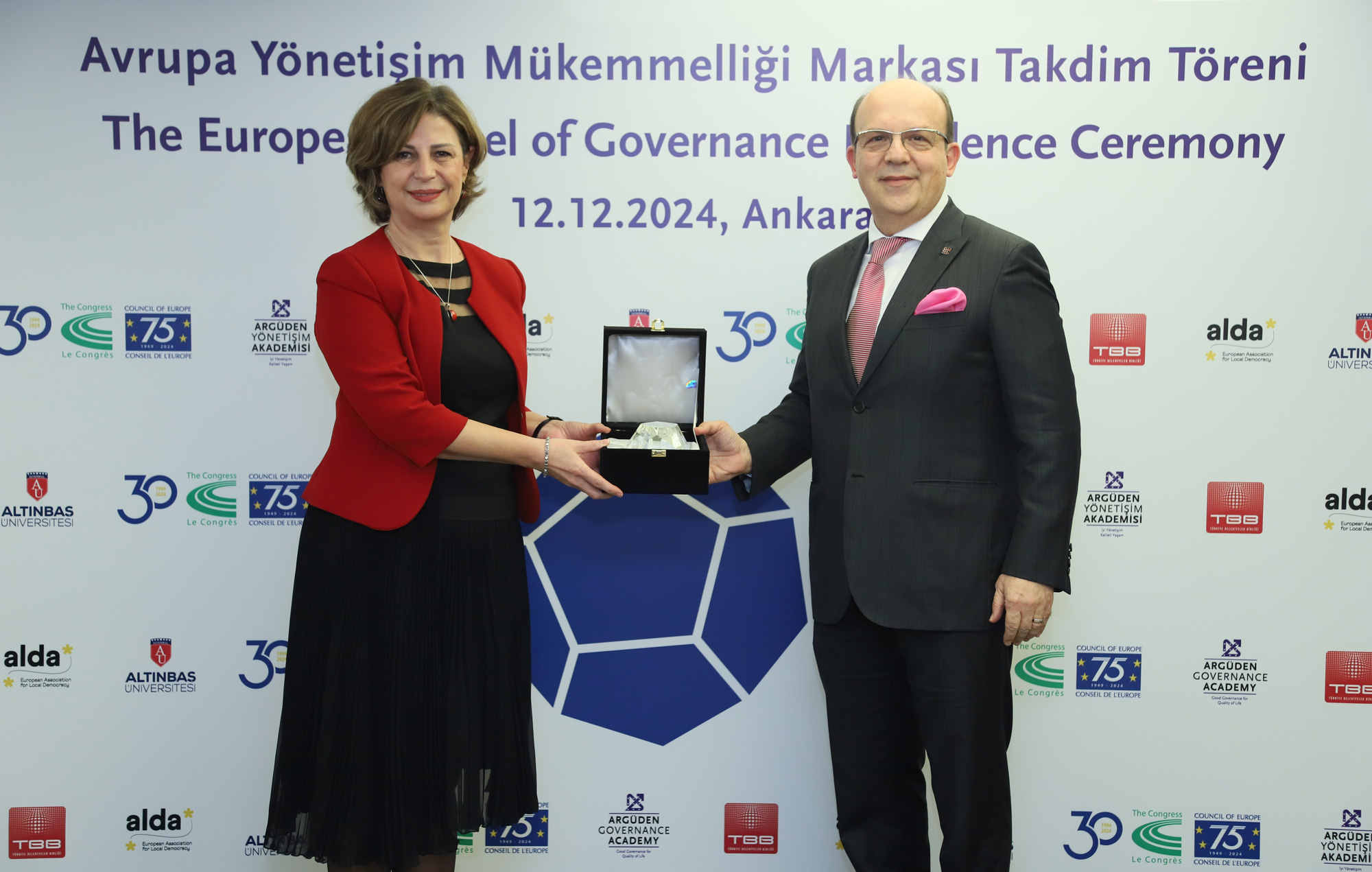
The European Label of Governance Excellence (ELoGE), granted by the Council of Europe to local governments that embrace and commit to developing a culture of good governance, was presented to thirteen municipalities during a ceremony hosted by the Union of Municipalities of Türkiye (UMT) on Thursday, December 12. Considering their efforts and commitments, the municipalities that acquired the right to use the Label are Adana, Amasya, Ankara, Avcılar, Bağcılar, Balıkesir, Eskişehir, Etimesgut, Gaziantep, Kadıköy, Melikgazi, Niğde and Sultanbeyli.

Applications were assessed by an independent jury of experienced bureaucrats, academics, and civil society representatives, based on the criteria established by the Council of Europe.

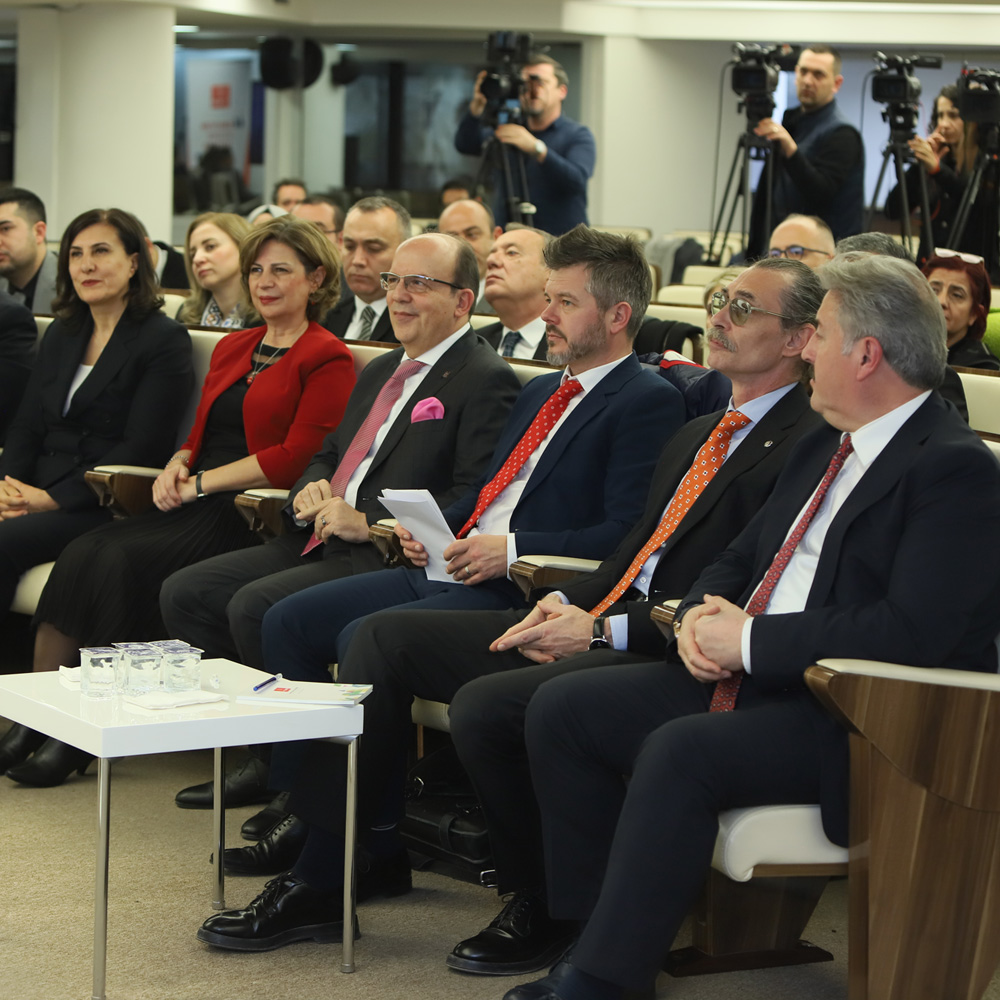
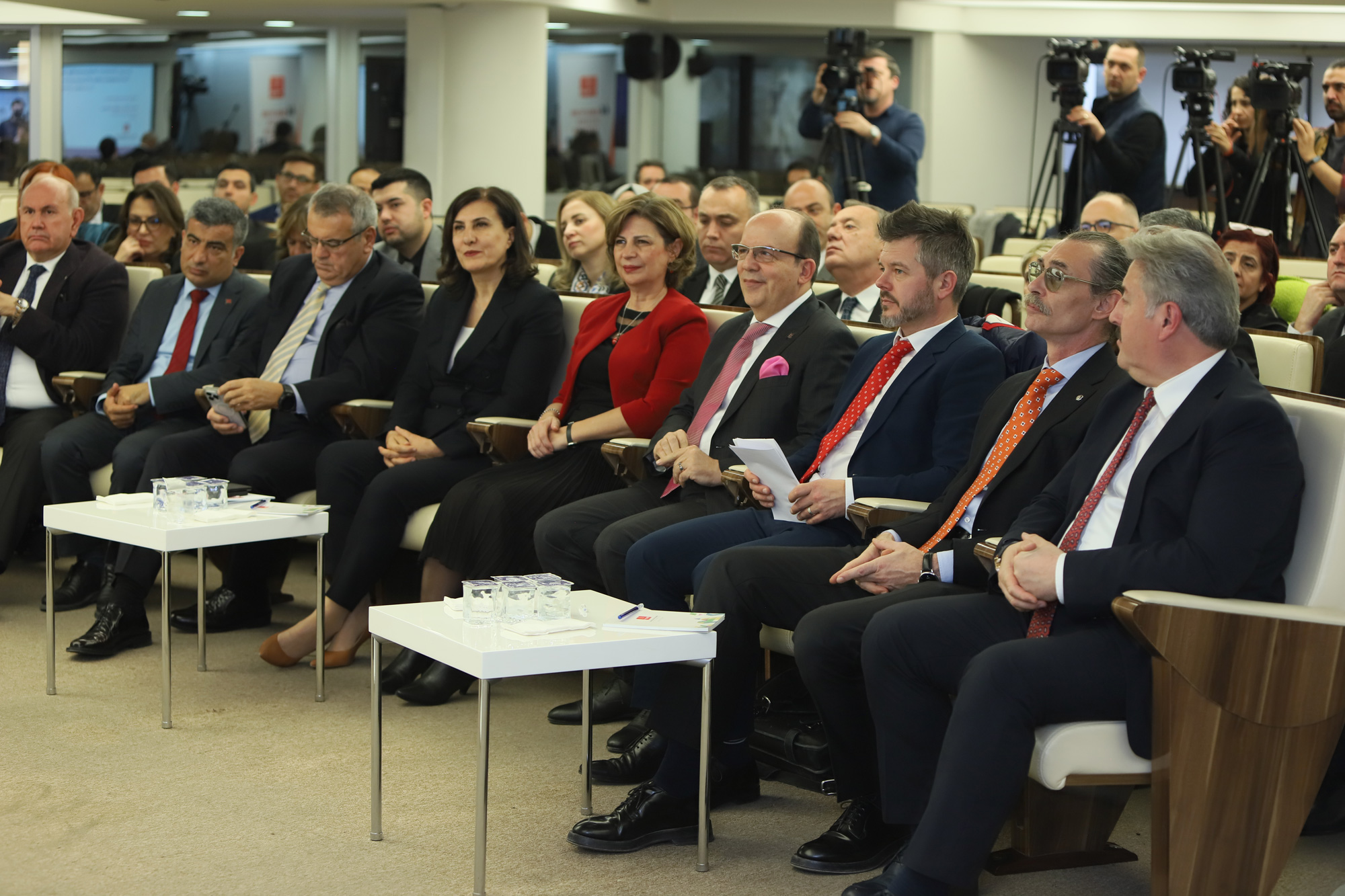
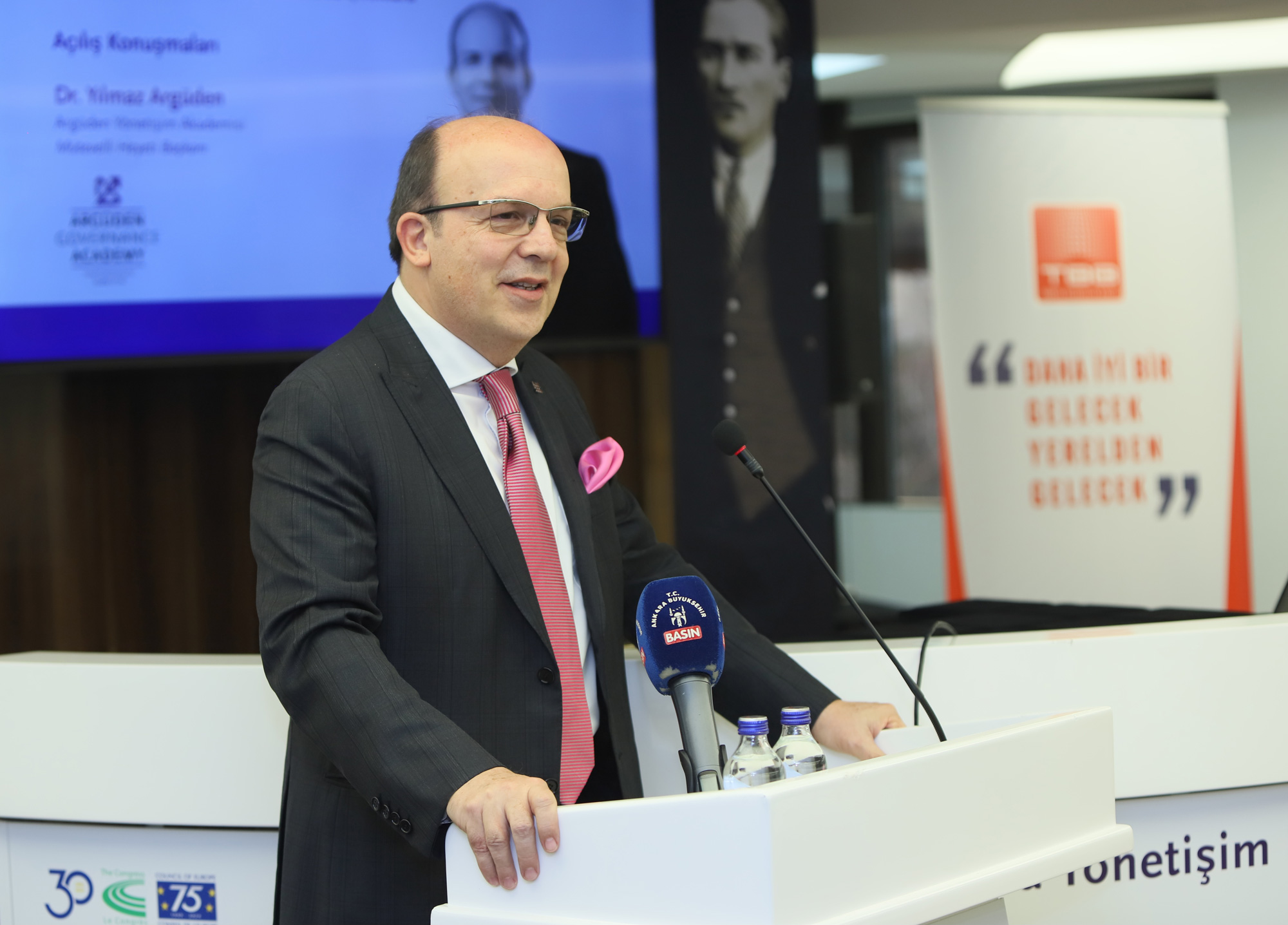
The event opened with speeches from distinguished representatives; Niall Sheerin, Vice President of the Council of Europe’s Center of Expertise in Good Governance; Mario Žuliček, Board Member of the European Association for Local Democracy (ALDA); Dr. Şengül Altan Arslan, Deputy Secretary General of the Union of Municipalities of Türkiye, and Dr. Yılmaz Argüden, Chairman of the Trustees of the Argüden Governance Academy.

Following the opening speeches, Dr. Erkin Erimez and Dr. İnan İzci, members of the Academic Board of the Argüden Governance Academy, along with Jury Committee Representative and former Governor Enver Salihoğlu, provided an overview of the European Label of Governance Excellence (ELoGE). After the presentation, the municipalities were presented with the Label.

The Governance Journey of Municipalities

Dr. Şengül Altan Arslan, Deputy Secretary General of the Union of Municipalities of Türkiye, said; “Local governments can establish trust only by ensuring participatory decision-making processes, inclusive services, and transparent practices. As the Union of Municipalities of Türkiye (TBB), we are committed to promoting these values and offering guidance to municipalities dedicated to achieving these principles. We are pleased to be involved in the process of ELoGE, developed by the Council of Europe and aligned with the objectives of our union, in our country. ”

Niall Sheerin, Vice President of the Council of Europe’s Center of Expertise in Good Governance, said; “The ELoGE, coordinated by the Argüden Governance Academy in Türkiye, is a key initiative aimed at strengthening the governance capacities of municipalities. The increase in the number of municipalities granted the right to use the Label from 2 to 13 within three years reflects a strong commitment by local governments in Türkiye to enhancing their governance practices and upholding the principles of democratic governance. This progress paves the way for municipalities to improve their performance and build stronger connections with their communities. The involvement and support of the Union of Municipalities of Türkiye in this process are highly valuable to us.”

Mario Žuliček, Board Member of the European Association for Local Democracy (ALDA), said; “Democracy signifies a process of social development and continuous improvement. In this context, local governments play a crucial role as drivers of change within society. ELoGE seeks to enhance governance effectiveness by providing municipalities with the opportunity to assess and improve their practices. Moreover, ELoGE promotes core democratic values such as strengthening human rights, fostering transparency, and upholding ethical principles. As ALDA, we are committed to supporting these values and working with local governments to enhance their democratic processes.”

Dr. Yılmaz Argüden, Chairman of the Board of Trustees of Argüden Governance Academy, said; “The European Label of Governance Excellence (ELoGE), serves as a valuable guide for local governments on their journey towards good governance. We take pride in seeing municipalities that have been part of this journey consistently improve their governance standards, alongside those newly joined the ELoGE process. Their collective success strengthens the culture of good governance in Türkiye. We extend our heartfelt congratulations to all municipalities that have earned this recognition.”

What is the European Label of Governance Excellence (ELoGE)?

The ELoGE was developed by the Council of Europe (CoE) to raise awareness, standardize governance quality, and promote good governance at the local level. Local governments holding or pursuing the Label are recognized for their efforts to enhance governance practices. The Label is managed by the Centre of Expertise for Good Governance (CEGG) which develops standards and tools under the control of the CoE’s European Committee on Democracy and Governance and granted to municipalities which have processes of good governance measured against a Council of Europe benchmark.

Argüden Governance Academy
Argüden Governance Academy is a non-profit foundation dedicated to improve the quality of governance in public, non‑profit, private, and international organizations. The Academy adopts a holistic and integrated view of governance to help improve trust for institutions for their sustainable success. The Academy forms partnerships with international organizations, universities, public institutions, companies, and NGOs for better deployment of good governance culture in order to improve quality of life for current and future generations.

The Union of Municipalities of Türkiye
The Union of Municipalities of Türkiye was established in 1945 as a public benefit association to operate in the field of municipalism and continued its activities in municipalism as an association for 57 years in order to protect the rights and interests of municipalities under the umbrella of the association. The Union of Municipalities of Türkiye gained the status of a union of local administrations with the decision of the Council of Ministers dated 21 August 2002 and numbered 2002/4559 in order to gather all municipalities in Türkiye under one roof. On 28.09.2005 by the Ministry of Interior, the Union of Municipalities of Türkiye, has gained the feature of being the only local government union that has the authority to represent municipalities at national and international level and where all municipalities are natural members.

European Association for Local Democracy (ALDA)
ALDA was established in 1999 at the initiative of the Council of Europe to coordinate and support the network of the Local Democracy Agencies (LDAs), which are self- sustainable, locally registered NGOs acting as promoters of good governance and local self-government, with which ALDA collaborates in many activities. ALDA is an association dedicated to the promotion of good governance and citizen participation at the local level in the European Union, its Neighborhood and beyond.

Altınbaş University
Founded under the name “Istanbul Kemerburgaz University” by Mehmet Altınbaş Education and Culture Foundation in 2008, the university proceeds on its way towards the future after its name was changed to “Altınbaş University” in 2017. With its strong academic staff adding value to universal knowledge, its global structure, international collaborations, and its entrepreneurial, innovative and competitive vision, the university enables students to develop and maintain a broader perspective all the time.

Visionary Leadership for
Bringing Quality

Someone has Undertaken the Challenge to Bring “Quality” to Our Lives

At times national leaders are very important. They motivate people, even when they do not get sufficient support they continue with their struggle, sometimes they fail, but generally they succeed…

Atatürk is such a leader. And his achievements are far beyond what many other leaders have accomplished.

Despite certain justified criticisms, Turgut Özal is also such a leader. One could perhaps come up with other examples. However, unquestionable leaders such as Atatürk are hard to come by.

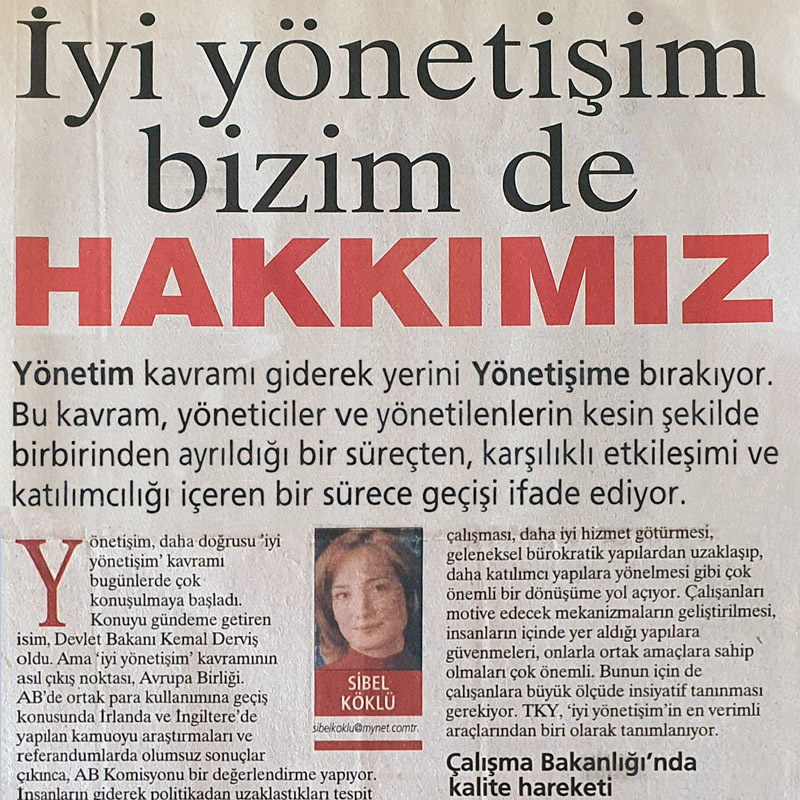
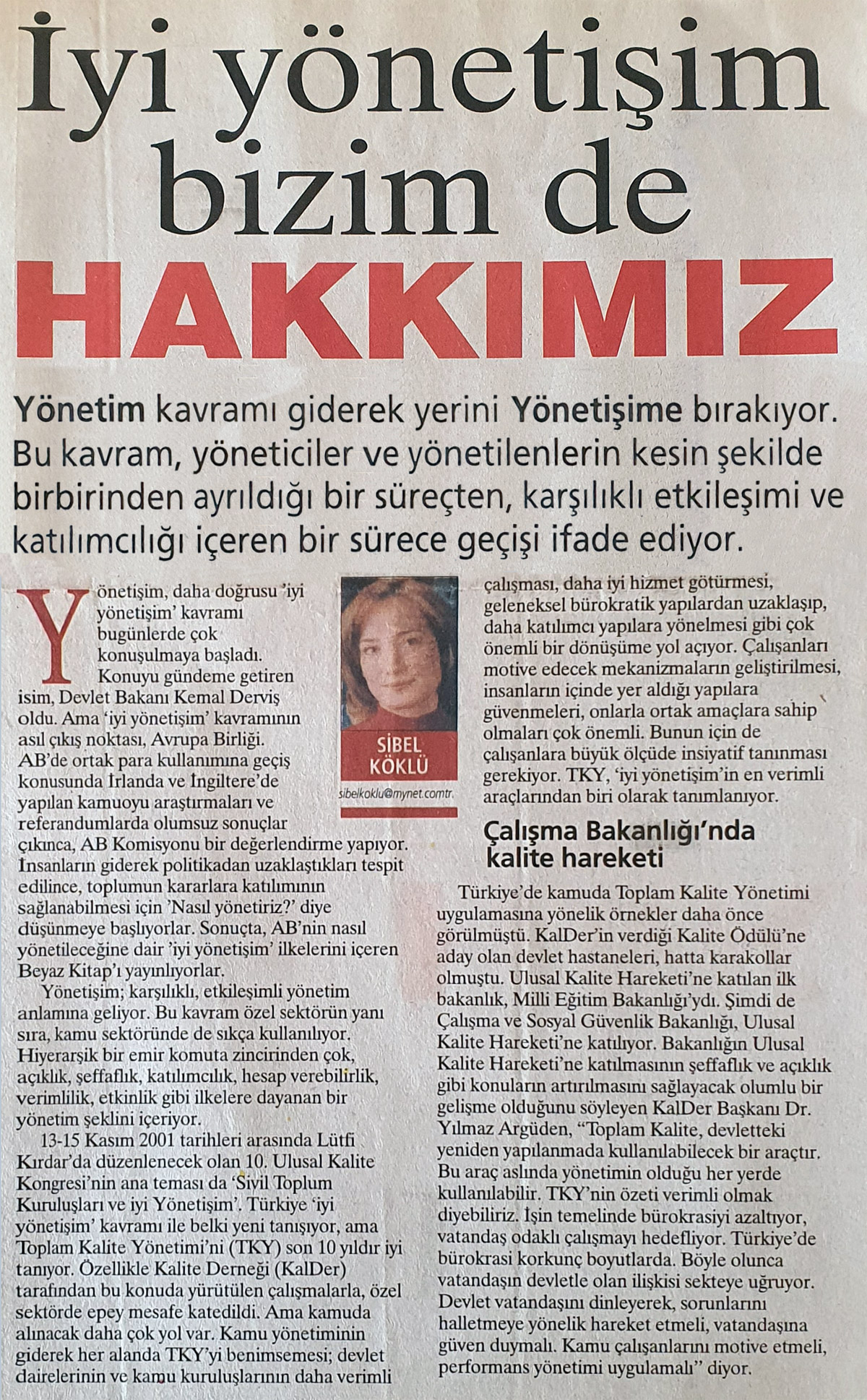
People who try to bring “quality” to Türkiye may also be considered among such leaders. Among them, one in particular, named Yılmaz Argüden has been continually striving to bring quality to all aspects of life.

When he has started this mission, some have even suggested that this was a self satisfying endeavor. However, he has demonstrated persistence and and brought the concept of quality to the agenda in all dimensions of our lives.

Argüden and his colleagues have brought the subject of quality in public life, politics, and business world into the national agenda. Lately, this issue is turning into a national issue.

Particularly this year, the establishment of a new category for quality awards for the SMEs will extend the reach of this concept throughout the country.

It is imperative to support the “National Quality Movement” initiatied by Argüden and his colleagues, if we are to improve the quality of our future.

December 21, 1998